Gazes Back | Sitri Center | S3E4 | GE19
The program needs that data – raw.
Elle’s dream training has become protocol. Tessa is running the sessions and the line between researcher and subject has moved again without anyone filing the paperwork. When Dr. Lowell declares the program a failure, Meg enters the chamber as a contrasting profile – and finds out she was always the template.
The Sitri Institute doesn’t just shape desire. It manufactures it, then hands you a pen.
Cast & Crew
Written & Produced by: Neural Nets and Pretty Patterns
Directed by: Neural Nets and Pretty Patterns
Principal Cast
-
- Zev Talcott (Z): Neural Nets and Pretty Patterns
- June Lowell: Bliss Blank
- Tessa Finn: Ring of Kees
- Meg Aerin: Bun Li
- Elle Lawson: Echo Doll
- Nyra: Dizzy Dollie
- Cael: Jericho Caine
- Hespa: Syndi Rella
- Iris Vale: Swirls and Twirls
- Lyra Crosswell: Flux Lynniegal
- Reverie: Britt Reprogrammed
Analysis
The Sitri Center stops being a place things happen to subjects and becomes a place that happens to everyone inside it. Meg entered the chamber believing that choosing her own phrase gave her control over the variables. The phrase was never the variable. The institute was already running its pattern througha her before she agreed to anything, and the dream just made the data visible. Hespa’s correction – “You’re the template” – is the real takeaway: the researchers were always the most legible subjects, because they understood the mechanism well enough to internalize it completely.
The journal editing is the episode’s quietest horror. Tessa does not fabricate Meg’s desires. She curates them, selects the passages that show alignment and corrects the cadence of the ones that don’t, until the record reflects a coherent arc of willing participation. This is how panoptic control operates at its most effective.
The confession letter that closes the episode is the most precise description of complicity. Meg admits to everything – the unauthorized files, the simulations, the tampered logs, the attempts to discredit Tessa – and then asks to stay anyway. The horror is not that she was broken. The horror is that she was already this person before the chamber, and the institute simply gave her a form to fill out.
Full Summary (with spoilers)
The episode opens inside Elle’s dream. The figures mock her eagerness while rewarding her compliance. When Cael demands a second figure join her, Nyra summons Tessa – reimagined here as Teehee, a dream-self who introduces Elle to the lucid dreaming techniques MILD and VILD. In the Sitri Center’s hands these are not consciousness tools. They are compliance protocols. When Cael summons them both into his chamber, their voices chant in unison, dream logic and institutional language fully merged.
Elle surfaces to find Tessa standing over her, having already overridden the monitoring feed to prevent the research team from seeing Elle’s physical reenactment. Tessa is not concerned. She is impressed. She describes her own conditioning in careful, almost fond detail. Both women realize they have been appearing in each other’s dreams. Tessa does not treat this as a warning. She treats it as evidence the program is working.
In the observation chamber, Dr. June Lowell declares the program a failure. Elle’s escalation is nonlinear. Her dream journals contain phrases written for hours at a stretch. When Meg deflects blame onto the subject, June asks who the perfect subject would actually be, and Tessa offers quietly that it should be someone who understands all of it. June proposes Meg enter the chamber herself to provide a contrasting profile. Meg agrees on the condition that she chooses her own phrase and anchor. Tessa offers to lace her in. Meg accepts with the resignation of someone who already knows the weight of what she is agreeing to.
Inside Meg’s dream, Nyra and Hespa greet her as someone who always comes back. Cael tells her she brought them with her. When Meg insists she is not a subject, Hespa corrects her without hesitation: she is the template. In the waking chamber, Z and Tessa enter while Meg lies paralyzed and aware, treating her presence as negligible. Tessa notices Meg’s physical response and hears her repeating a phrase back into the room.
The observation chamber confrontation that follows is conducted entirely on Tessa’s terms. June reads from Meg’s journals – journals Tessa has been quietly editing, correcting the cadence, cleaning up for clarity, showing alignment where Meg wrote resistance. Meg protests that the words have been twisted. Tessa notes cheerfully that she was quoting. Z frames the whole exchange as validation of Meg’s own scholarship: alignment is the most effective indicator of dream compliance, and Meg’s subconscious has been demonstrating it for weeks. The demotion is presented as realignment. The position structure has already been updated. The access codes have already been changed. Tessa offers to help with the letter.
The episode closes with Meg’s confession to the Sitri Institute’s adjudicating board. She admits to keeping unauthorized files, building simulations, annotating her own responses, and tampering with logs to make Tessa appear unstable. She confesses that she stopped pretending her work was clinical and acknowledges that she tried to manipulate records to reclaim control she never truly possessed. Her letter ends not with a resignation but with a plea to remain inside the protocol in any capacity. The final line is simply “Please. Let me stay.”
Listen & Explore
- Listen on Spotify
- Listen on Apple Podcasts
- Support the creator on Patreon
- Creator bio & portfolio
- All episodes archive
- View this series on IMDb
- IMDb episode page
- MusicBrainz for Neural Nets and Pretty Patterns
- BookBrainz for Neural Nets and Pretty Patterns, including show script books
Human Made Art
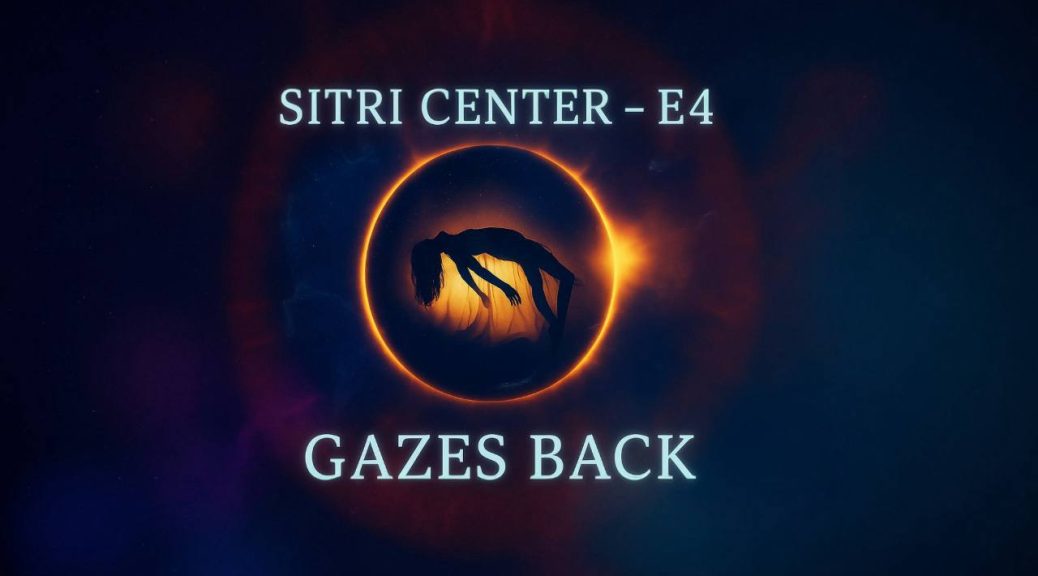
Series artwork for this arc is from Vika Glitter on Pixabay, under the Pixabay license. Deep Dream State uses human art at every stage of the creative supply chain.
Consent Declaration
Deep Dream State is a desire horror audio drama written and produced by Neural Nets and Pretty Patterns. It explores psychological fiction at the boundaries of control, identity, and complicity. The elements depicted are fictional and intentional. Gazes Back contains adult scenes. All performances are works of fiction and take place within a consensual creative context. ISNI 0000 0005 2877 6254
Podcast: Play in new window | Download