Tag: Episode 2

Adapt | Sitri Center: Threat Simulation Cycle

Adapt | Sitri Center: Threat Simulation Cycle

This center is my dream.

Construct 37 is running. The dreams are escalating. The research team is watching. Tessa Finn is about to learn the difference between engineering a dream and becoming one.


Cast & Crew

Written & Produced by: Neural Nets and Pretty Patterns
Directed by: Neural Nets and Pretty Patterns
Co-Directed by: Bliss Blank

Principal Cast

Zev Talcott (Z) – Neural Nets and Pretty Patterns
June Lowell – Bliss Blank
Tessa Finn – Ring of Kees
Meg Aerin – Bun Li
Nyra – Dizzy Dollie
Oona Reyes – Jade
Cael – Jericho Caine
Hespa – Syndi Rella
Iris Vale – Swirls and Twirls
Reverie – Britt Reprogrammed


Full Summary

Dream Sequence: Store

Phoebe’s dream places her in an adult store with Hespa, contemplating taking something they haven’t paid for. The nervous excitement of the scenario is the point: risk, visibility, the possibility of being caught and seen. Cael and Nyra arrive as security and take them to the backroom. What begins as consequence becomes compulsion. The dream logic follows its own rules, and Phoebe finds that resistance is not the direction her subconscious is moving.

Observation Chamber

The research team watches Phoebe’s escalating responses with growing disagreement. Tessa insists the construct needs more time. June calls it obsessive. Meg calls it degenerating. Z mediates without resolving anything. Phoebe’s vocalizations from the dream chamber provide an ongoing counterpoint to the professional argument above her, and the irony of what she is saying while the researchers debate methodology is not lost on anyone in the room. June accuses Z of bias toward Tessa. Z does not deny it.

Dream Sequence

The dream deepens. Nyra, Cael, and Hespa inform Phoebe that she has passed a threshold and will now perform for observers. The dream figures describe what she is becoming with the patient certainty of entities that have watched this process many times before. Phoebe’s resistance folds into need. The strings are pulled.

Observation Chamber: Aftermath

Phoebe’s voice comes through the intercom. June delivers her verdict on Tessa’s experiment with the cold precision of someone who has been waiting to deliver it: Construct 37 did not teach Phoebe to escape her fears. It taught her to eroticize her humiliation. Each response has reinforced the loop it was designed to break. Meg savors the outcome. Z turns on Tessa with a cruelty that surprises even Meg. June notes clinically that the subject is now fully compliant and that the approach is, in its way, effective.

Outro: Tessa’s Letter

Tessa reads her written confession to the adjudicating committee of the Sitri Institute. She accepts full responsibility. She names what she built: not a ladder but a spiral. She names what she became: a voyeur whose professional boundaries dissolved in stages she catalogued and continued past anyway. She names what she wants, even now, even after all of it.


Listen & Explore


Explanation

Adapt resolves the Construct 37 trial in the direction Meg predicted and in a way that implicates everyone watching. The observation chamber scenes are structured so that the researchers’ professional debate runs continuously alongside Phoebe’s dream vocalizations, and the juxtaposition is the argument: the language of scientific rigor and the language of what is actually happening in the chamber are the same language with different justifications attached.

June’s clinical verdict, that the subject is now fully compliant and the approach is effective, is the most honest thing anyone says in the episode. It acknowledges the outcome without acknowledging the responsibility.

Tessa’s closing letter is the arc’s first genuine confession and its most formally precise piece of writing. She does not minimize what happened. She names each stage of her own dissolution with the careful specificity of someone trained to observe and document, turned finally on herself. The letter is also, structurally, exactly what Meg said she would script for the committee: an admission that private-sector bravado failed utterly. Tessa delivers it in her own voice. That is the detail that makes it desire horror rather than simply tragedy. She built the spiral. She walked down it. She is begging to stay near the bottom.


Human Made Art

Series artwork for this arc is from Vika Glitter on Pixabay, under the Pixabay license. Deep Dream State uses human art at every stage of the creative supply chain.


Consent Declaration

Deep Dream State is a desire horror audio drama written and produced by Neural Nets and Pretty Patterns. It explores psychological fiction at the boundaries of control, identity, and complicity. The manipulative elements depicted are fictional and intentional. All performances are works of fiction and take place within a consensual creative context. ISNI 0000 0005 2877 6254

Glass Houses | Incognitoh: Glass House Cycle

Glass Houses | Incognitoh: Glass House Cycle

We demand the world we despise.

Five contestants move into the Glass House, a fully transparent competition space where privacy is a setting you toggle and suspicion is the only currency that matters.


Cast & Crew

Written & Produced by: Neural Nets and Pretty Patterns
Directed by: Neural Nets and Pretty Patterns
Co-Directed by: Bliss Blank

Contestants

Madison – Pipp
Ashley – Jade
Hannah – Echo Doll
Zarah – Bun Li
Kim – Bliss Blank

House Staff

April, House Synthserv – Bliss Blank
Kitty, Season One Winner – Flux
Bella, Coven Leader – Dizzy Dollie

Note: April and Kim are both voiced by Bliss Blank, a production choice that becomes meaningful as the arc develops.

The Council

Cupcake
Geek
Jae
Shiney
Syndi Rella
Princess Ella
Kitten Azazel


Full Summary

Dramahh

The opening sequence delivers maximum drama in minimum time. Five contestants speak directly to camera in rotating confessional cuts: everyone’s wearing masks, everyone’s being watched, everyone thinks they’ve got the others figured out. The game show format is already doing its work before anyone has moved in. The sequence closes with all five voices landing on the same line in unison: it’s not a game anymore.

Moving In

The contestants arrive at the Glass House, a fully transparent competition space that functions as both a dollhouse and a surveillance installation. April, the house synthserv, introduces herself and the architecture: the walls are glass by default, but each contestant can say incognito to go opaque. The catch, which Kitty explains with cheerful precision, is that going private looks suspicious. If you hide, everyone wonders why. The rational strategy is visibility. The game is designed so that transparency feels like a choice.

Icon

Kitty walks the contestants through choosing their secret icon, the hidden identity they’ll spend the game protecting. April has already seen everything, including what Kim was doing in the shower, but what April sees isn’t the point. What the other contestants see is the point. Each player selects their icon in private. The questionnaire results are read back in rotating answers.Β  Someone has already told on themselves before the game has formally begun.

Immunity

The immunity challenge is explained with deliberate vagueness. The contestants go to their rooms. The walls go opaque. They can’t see each other but they can hear each other. The Council is watching. The challenge is to earn tokens by performing for the Council without being identified by the other contestants, who can press a stop button to expose them on the spot. The game rewards those who can perform without being recognized.

Council

Bella and the Council watch the immunity challenge from their observation room, commenting on each contestant’s performance with the appreciative detachment of people who have run this operation before. One of them notes that Milgram would be proud. Bella says they can all be earners – including the audience.

Earners

The immunity challenge begins. Each contestant performs in their room for the Council while trying to stay quiet enough that the others can’t identify them. Hannah is anxious about whether this is on television and is reassured that it won’t be shown. Kim loses control of the quiet part. Madison, listening from her red room, recognizes the voice immediately.

Exile

Madison hits the buzzer. The walls go clear. Kim is exposed mid-performance, visible to everyone in the house simultaneously. The humiliation is total and immediate.Β  Kim, in her exit interview, says she’d play again. She’d do it better.

She’d stay incognito.


Listen & Explore


Explanation

Glass Houses is Pink Noir: the pastel surveillance aesthetic pushed to its logical conclusion.

The architecture itself is the instrument of control and the most rational response to the system is also the most complete surrender to it. The Glass House is designed so that transparency feels like agency. You decide who sees, April tells them, and technically this is true. You can go opaque whenever you want. But going opaque looks suspicious, and suspicion is the one thing the game punishes without mercy.

The immunity challenge makes the same move at a more intimate scale. The contestants perform for the Council in private, behind opaque walls. Madison demonstrates that the containment was always illusory. The glass was never really off. The exposure was always available to anyone paying close enough attention.

Kim’s exit is the episode’s thesis delivered as comedy: she came in wanting to stay incognito and left having been the most visible person in the house. The whisper that follows her out is the audience’s voice as much as the Council’s.

The Incognitoh arc is Pink Noir because the horror is pretty, the cage is a dollhouse, and everyone inside it chose their room color.


Human Made Art

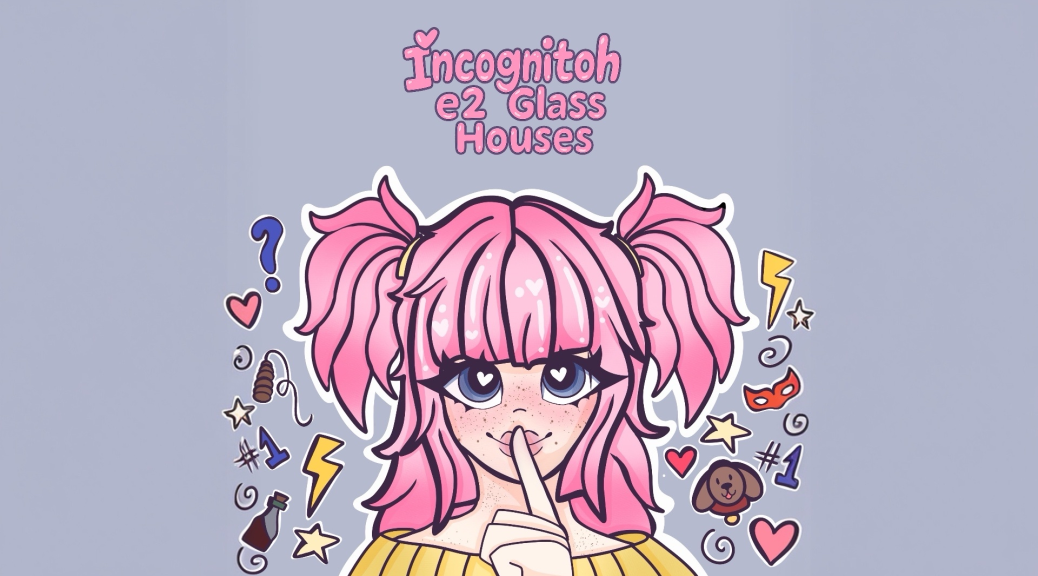
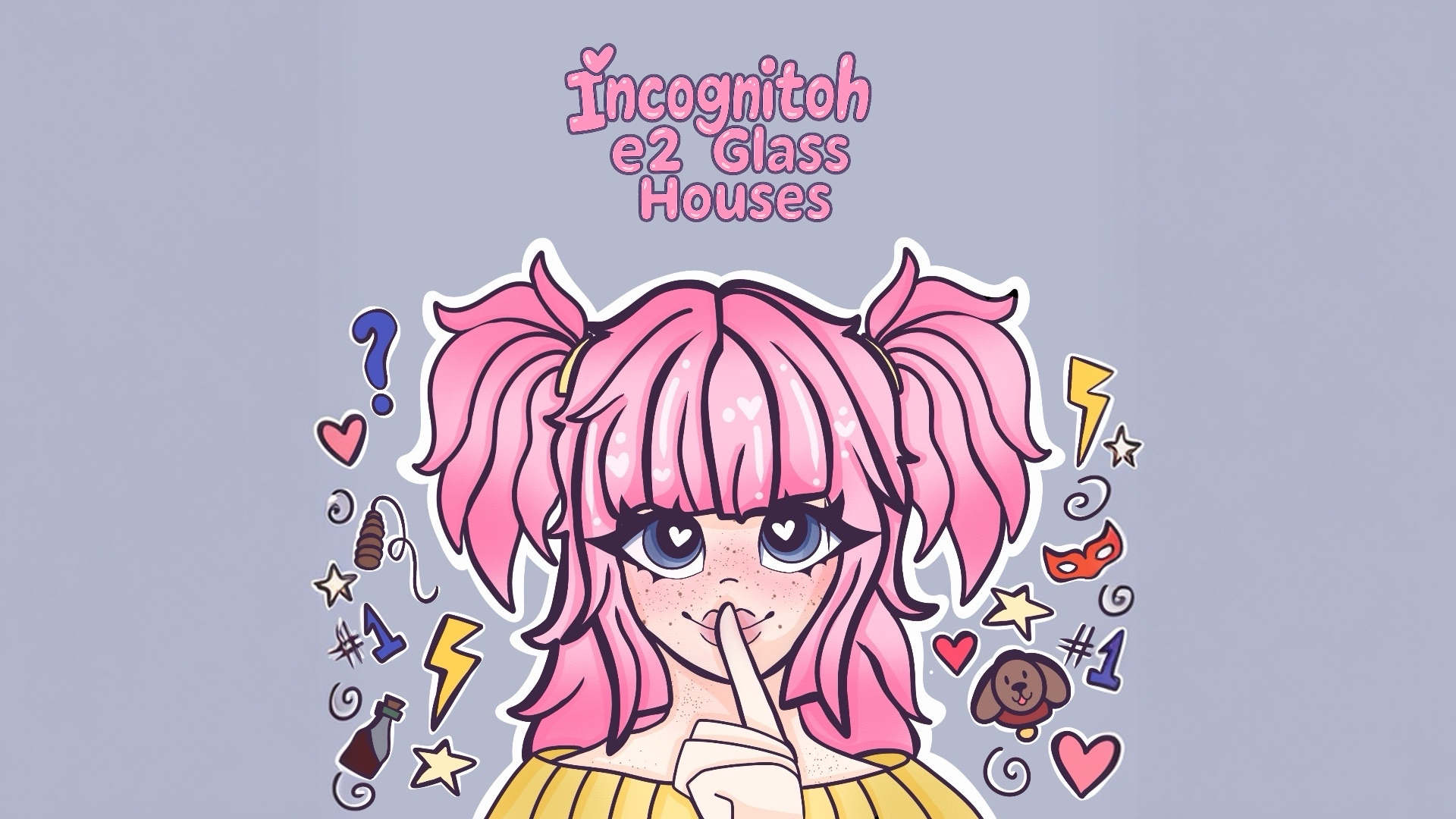
Series artwork is hand drawn by Echo Doll. Deep Dream State uses human art at every stage of the creative supply chain.


Consent Declaration

Deep Dream State is a desire horror audio drama written and produced by Neural Nets and Pretty Patterns. It explores psychological fiction at the boundaries of control, identity, and complicity. The manipulative elements depicted are fictional and intentional. Glass Houses contains adult themes, suggestive content, surveillance dynamics, and gamified coercion. All performances are works of fiction and take place within a consensual creative context. ISNI 0000 0005 2877 6254


Incognitoh Episode 2 cover art featuring a hand-drawn anime-style girl with pink pigtails and heart-shaped pupils holding a finger to her lips, surrounded by floating icons including a question mark, lightning bolt, mask, puppy, bottle, whip, and stars against a lavender background
Incognitoh, Episode 2 Glass Houses. She knows something. She just doesn’t know what yet. Hand-drawn art by Echo Doll.