Tag: Episode 3

Sinker | Vale Four: Hooks Cycle

Sinker | Vale Four: Hooks Cycle

The whole world is already singing.

Sinker is the third episode of the Vale Four arc and the Hooks Cycle. The hook doesn’t need the lab anymore.
Hilton and Astoria have opinions. Celeste and Vera finally tell someone. That someone tells Z. Z tells Iris. Iris tells the camera. The camera tells everyone.

June watches. Naia plants seeds and waits.

Vale Four goes public. So does everything else.


Cast & Crew

Written & Produced by: Neural Nets and Pretty Patterns
Directed by: Neural Nets and Pretty Patterns
Co-Directed by: Bliss Blank

Recurring Cast

Z – Neural Nets and Pretty Patterns
June Lowell – Bliss Blank
Tessa Finn – Ring of Kees
Meg Aerin – Bun Li
Naia Anderson – Dizzy Dollie
Elle Lawson – Echo Doll
Iris Vale – Swirls and Twirls
Cael Yupp – Jericho Caine
Hespa Apate – Syndi Rella
Astoria – Dakota Dream
Hilton – Tickled Panda
Synthserv 3.0 – Valentina Vallay

Guest Stars

Vera – Fallen
Celeste – Panda Moanium


Scene By Scene Summary

Hilton Astoria

Two women observe the proceedings from a comfortable remove and have thoughts.Β  Delivered with the energy of people who have seen this particular show before and are not impressed but cannot look away. Hilton and Astoria function as the episode’s conscience and its comic relief, which in desire horror are often the same job. They know more than they should. They’re going to tell you anyway. The balcony is open.

Motif

Celeste and Vera come to Elle because she never makes them feel stupid.Β  This is, of course, exactly why Elle needs them.Β  The scene operates on two frequencies simultaneously: two women trying to describe something that is happening to them in real time, and one woman trying to collect testimony without tipping her hand. Elle hands them a map with heart-shaped dots she calls X marks.Β  She tells them to only share what they know with someone they can trust.Β  The camera knows where this is going.Β  Elle knows where this is going.Β  Celeste and Vera are about to find out.

Chord

Celeste and Vera go to Z.Β  Z goes to Iris.Β  Iris pours coffee.Β  The scene plays as institutional warmth until you notice how fast the intake form appears, how quickly the scale of one to five replaces the open question, and how efficiently two women describing a genuine crisis get rerouted into additional programming and shower privileges. Z and Iris are not villains in this scene.Β  They are professionals.Β  That is the horror.

Tilt

Vera plays pinball. Pinball plays Vera.Β  The arcade sequence is the episode’s most formally precise scene: a haptic feedback loop so well designed it doesn’t need a lab to function. The machine has the hook. The machine has always had the hook. Celeste watches and arrives, with some urgency, at the conclusion that they need to try a different way out. She still has the map.

Unmasked

Celeste and Vera find the X on the map and press the button. The shutters open. What they see on the other side is not, technically, them. That distinction stops mattering fairly quickly. Tessa arrives and the scene pivots from institutional warmth to something considerably colder. Tessa is not managing them anymore. She is diagnosing them. Then she is dismissing them. Then Iris arrives and they are wardrobe. The episode’s central horror lands here: the difference between subject and asset was always administrative.

Hooks Inc.

Z and Iris perform an infomercial for the system they are running.Β  This is not a metaphor.Β  They literally perform an infomercial, complete with product demonstration, testimonials from Celeste and Vera, and a jingle Iris did not realize she had already absorbed.Β  The scene is the boldest formal move in the Vale Four arc: desire horror as direct address, the fourth wall as a control surface.Β  Z explains the Haptic Hook with the confidence of someone who has never once considered that explaining it might also be deploying it.Β  Iris figures this out approximately one beat too late.

You were always going to perform. They just gave you an audience.

Pruning

June and Naia in the garden nest, processing what they just watched.Β  June is disgusted.Β  June is also, she would rather not admit, a little turned on.Β  Naia is not surprised nor particularly moved.Β  She has been thinking in longer cycles than anyone else in this facility and the crop, she concludes, simply was not ready.Β  They will plant more seeds.Β  They will wait.Β  One will bloom in time.

The episode ends in a garden with two women who understand the system better than anyone and are choosing, for now, to tend it from the outside.


Listen & Explore


Framework

Deep Dream State coined the desire horror genre to describe exactly what Sinker demonstrates: the most effective systems of control don’t need a dedicated space to function. They need a pattern. Any pattern. Workout mixes. Video games. An arcade in a corporate research facility on an island in the Pacific Northwest. Once the hook is installed it doesn’t care where the signal comes from.

Sinker is the episode where Vale Four stops being a contained experiment and starts being an infrastructure. The Haptic Hook sequence is not just the arc’s formal highpoint. It is the argument the entire series has been building toward: desire horror doesn’t override the will. It books it. It puts it on a schedule. It gives it better lighting and calls it picture.

Z explains the system with the serenity of someone who has genuinely never considered that the explanation might also be the product. Iris figures this out one beat too late. The audience, depending on how carefully they have been listening, may have figured it out several episodes ago. That gap is where the genre lives.


Human Made Art

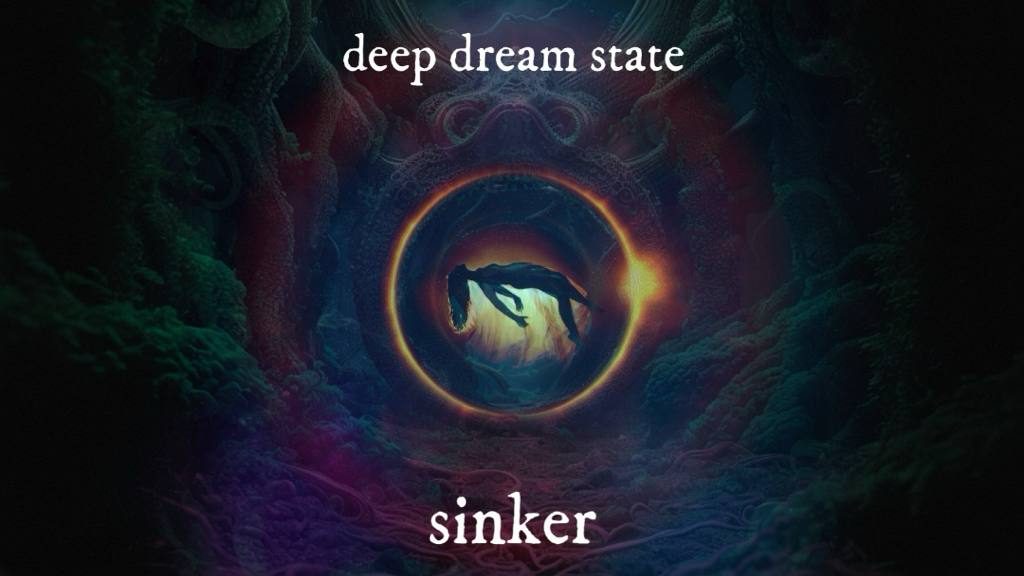
The poster image for this arc is from Sunrise Forever, under the Pixabay license. Layer art overlays are used to vary each iteration of the image. You can find the original here.


Consent Declaration

Deep Dream State is a desire horror audio drama written and produced by Neural Nets and Pretty Patterns. It explores psychological fiction at the boundaries of control, identity, and complicity. The manipulative elements depicted are fictional and intentional. This is a story about what happens when consent is algorithmically removed, not a celebration of that process. Vale Four explores audio conditioning and behavioral manipulation as horror. The hooks in this episode are fictional. The science behind them is not. All performances are works of fiction and take place within a consensual creative context.

Incubator | Sitri Center: Sleep Paralysis Cycle

Incubator | Sitri Center: Sleep Paralysis Cycle

You’re not being graded. You’re being rewritten.

Elle Lawson is locked in REM paralysis. The dream figures are already inside. Meg Aerin is taking notes. The Construct is responsive and the journal is mandatory and the line between researcher and subject is getting harder to locate in the data.


Cast & Crew

Written & Produced by: Neural Nets and Pretty Patterns
Directed by: Neural Nets and Pretty Patterns
Co-Directed by: Bliss Blank

Principal Cast

Zev Talcott (Z) – Neural Nets and Pretty Patterns
June Lowell – Bliss Blank
Tessa Finn – Ring of Kees
Meg Aerin – Bun Li
Elle Lawson – Echo Doll
Nyra – Dizzy Dollie
Cael – Jericho Caine
Hespa – Syndi Rella
Iris Vale – Swirls and Twirls
Lyra Crosswell – Flux Lynniegal
Phoebe Bosworth – Sofi Starship
Oona Reyes – Jade
Substitute Teacher – Korrupted Innocence
Reverie – Britt Reprogrammed


Explanation

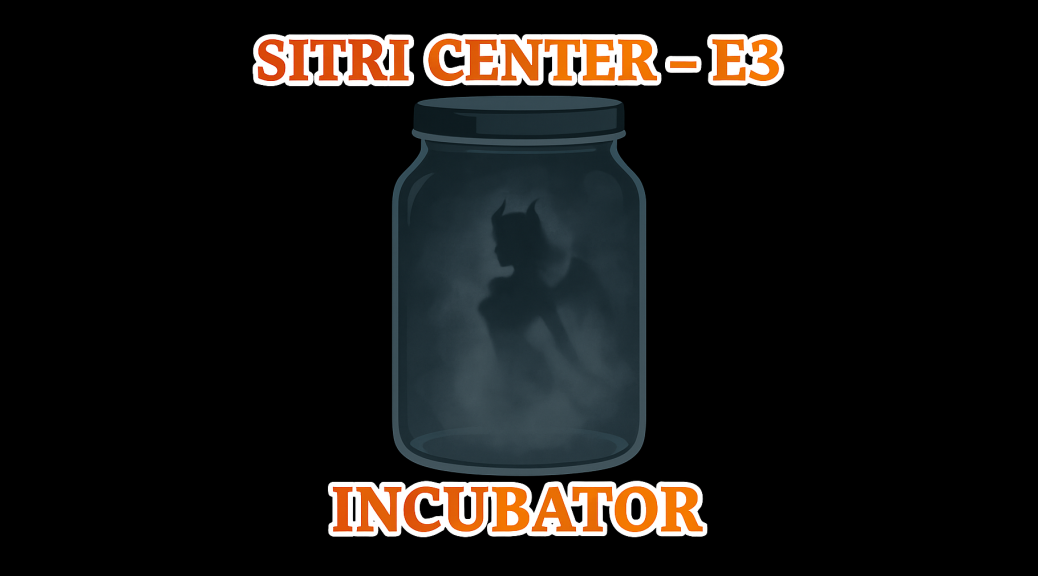
Incubator is the first episode of Cycle 2 and the arc’s most direct engagement with the Ars Goetia. Sitri, a Prince of Hell with dominion over desire and the stripping bare of subjects, presides over a research institute that has reframed incubus and succubus mythology as clinical data. Meg’s observation log treats the shadow presence not as hallucination but as a functional myth.

It persists because it works, and the subject learns to receive. The Sitri Center isn’t debunking the mythology; It is operationalizing it.

The fake advertisements continue Better Self promises you should decide what belongs in your dreams, which is the autonomy the Construct is designed to redirect. Please Space promises to rewrite your calm, with the name Namaah embedded as an underlay in the opening instruction. (Namaah is a figure from Kabbalistic demonology associated with seduction and the corruption of sleep, and her name appears in the advertisement for a meditation app designed to help you rest.)

The advertisements are not interruptions. They are the system explaining itself in a warmer register.

The VILD and MILD techniques Meg prescribes to Elle are genuine lucid dreaming methods used in sleep research. The show is not misrepresenting them. What the show is doing is placing them in the hands of a researcher who is simultaneously losing her own grip on the distinction between observation and participation, and asking what it means to be taught to recognize absurdity inside a dream by someone who has stopped recognizing it outside one. Meg’s journal entries answer that question with the precision of someone trained to document and the candor of someone who stopped redacting.


Full Summary

Intro

Z introduces the episode with characteristic directness. Tonight’s story is called Incubator and it concerns sleep paralysis, incubi, and succubi, which as the episode will demonstrate are sometimes the same phenomenon.

Ad: Better Self

Iris Vale opens with the Better Self advertisement, presenting the app not merely as a meditation tool but as a boundary, a science-backed method for sleeping deeper while maintaining control over what enters your unconscious. The first seven nights are free, which is just enough time to relearn how to sleep on your own terms. You should decide what belongs in your dreams.

Observation Lab

Meg Aerin records her project log while Elle Lawson remains in stabilized REM paralysis in the adjacent chamber, her fragmented vocalizations suggesting an experience that is intensifying rather than resolving. Elle is part of the Forty-Four cluster, a group of subjects presenting with invasive dream penetration and persistent paralysis states, and Meg has begun theorizing the phenomenon in mythological terms: the shadow at the foot of the bed, the weight on the chest, the breath at the neck, the ancient figures that persist across cultures because they function. The subject learns to receive, Meg notes in her log, with the calm of someone who finds this observation clinically useful.

Tessa attempts to contribute to the session and is dismissed efficiently. June arrives demanding metrics rather than mythology, names a seven-night deadline for neurocompliance benchmarks, and threatens Tessa with reassignment to the walk-ins if she speaks out of turn again during an active log. The funding is precarious and the funders are predators and the poetry, however good Z finds it, will not keep them patient. Elle’s dream vocalizations continue over the intercom throughout the confrontation, running underneath the professional exchange like a persistent signal nobody is quite willing to address directly.

Dream Sequence

Elle’s dream places her in a house where Nyra and Hespa are already hiding when she arrives, which is the first indication that the dream has run this script before. They warn her that he is already inside and that she keeps asking him back, which Elle resists acknowledging but cannot quite deny. Cael arrives. Mercy is available at a price Nyra already knows how to pay. Elle discovers she cannot move, which is the dream’s defining characteristic and also, the dream figures suggest, its defining appeal. The script runs.

Dream Chamber

Elle surfaces gasping and immediately mortified to learn she had been speaking aloud, a phenomenon Meg identifies as residual suggestion and frames as biology rather than something requiring shame. Elle confesses that she knew she was dreaming and did not want to stop, which Meg receives as useful data rather than a confession. What follows is a clinical introduction to VILD and MILD, Visual Induction and Mnemonic Induction of Lucid Dreams: techniques involving the deliberate rehearsal of dream scenarios before sleep and the repetition of a phrase like a prayer at the threshold of consciousness. The goal is recognition, the moment inside the dream when absurdity becomes visible and the dreamer wakes up within it. The dream journal is mandatory, to be written every morning regardless of what is remembered, because the brain must be trained to treat these dreams as important. Skip a day and the Construct’s responsiveness means the dreams will intensify in compensation. Elle asks if Meg uses these techniques herself. Meg says of course, from a distance that suggests the answer is more complicated than the word.

Observation Chamber

The professional log continues from the observation chamber while Elle dreams in the room adjacent, the two of them running in a parallel that Meg’s entries make increasingly difficult to describe as coincidental. The journal entries that surface in the log are Meg’s own: Z, the cable looped around the thighs, the calibration sessions framed as clinical edging, the instruction to recite the consent protocol until she stutters the word revocation at which point he says not yours anymore. She has started dreaming about Tessa. She has stopped thinking critically during the sessions. She wrote the word noise to describe everything that is not her body and her data and she found she meant it.
June enters and finds Meg in a state that is not, technically, real-time correlation tracking. Elle’s voice continues from the dream chamber asking to be seen, asking to fill the protocol, asking to understand what she is for. June observes that Elle has become quite the echo chamber and informs Meg that her continued participation in the project depends on performance and discretion, that she will review Elle’s journal in the morning, and that she is quite sure Elle will have edited it.

Midroll Ad: Please Space

Iris Vale closes the episode with the Please Space advertisement, a meditation program engineered by sleep scientists for people whose racing thoughts and restless nights have become unmanageable. The soundscaping adapts to your rhythms, the sessions reset and rewire and rewrite your calm, and the first seven nights are free. Underneath the opening instruction, barely audible before the warmth of the sales voice reasserts itself, the name Namaah appears as a spoken underlay.

We ensure you will be saying it. Please.


Listen & Explore


Human Made Art

Series artwork for this arc is from Vika Glitter on Pixabay, under the Pixabay license. Deep Dream State uses human art at every stage of the creative supply chain.


Consent Declaration

Deep Dream State is a desire horror audio drama written and produced by Neural Nets and Pretty Patterns. It explores psychological fiction at the boundaries of control, identity, and complicity. The elements depicted are fictional and intentional. Incubator contains adult themes, dream manipulation, sleep paralysis imagery, and institutional power dynamics. All performances are works of fiction and take place within a consensual creative context.

ISNI 0000 0005 2877 6254

Uniforms | Incognitoh: Glass House Cycle

Uniforms | Incognitoh: Glass House Cycle

They can’t clock me.

Every uniform tells a story. None of the stories are real. What matters is what they do to you: how they fit and what they unlock.


Cast & Crew

Written & Produced by: Neural Nets and Pretty Patterns
Directed by: Neural Nets and Pretty Patterns
Co-Directed by: Bliss Blank

Contestants

Madison – Pipp
Ashley – Jade
Hannah – Echo Doll
Zarah – Bun Li

House Staff

April, House Synthserv – Bliss Blank
Kitty, Season One Winner – Flux
Bella, Coven Leader – Dizzy Dollie

The Council

Princess Ella
Syndi Rella


Full Summary

Stealth

The opening sequence recaps the game’s premise through rotating confessional cuts.Β  Kim’s elimination hangs over the house like a warning no one is willing to say out loud. The game is on.

Elegy

April and Kitty replay Kim’s elimination footage for the audience’s benefit and their own amusement. Kitty cannot watch without giggling.Β  The subtext is clear: Kim’s exit was a lesson, and everyone in the house is currently deciding what they learned from it.

Claws

The remaining contestants process Kim’s elimination in the main room. Ashley swears on Inanna’s name that she will never go out like that. Zarah defends Kim on principle while calculating her own position. Madison delivers a verdict on Kim’s gameplay that is simultaneously accurate and devastating. The alliance that will define the rest of the arc begins to take shape around a shared target: Ashley, the gamer.Β  She’s the threat because she’s the one who never loses.

Uniforms

The Glass House issues uniforms. Each one is form-fitting, icon-coded, and designed by Neuroplex to specifications the contestants haven’t been told yet. Zarah threatens to call HR. Madison decides latex is just a director’s note. Hannah notes that she always wears a uniform anyway. Ashley asks if there’s more to this.

There is considerably more to this.

Alliance

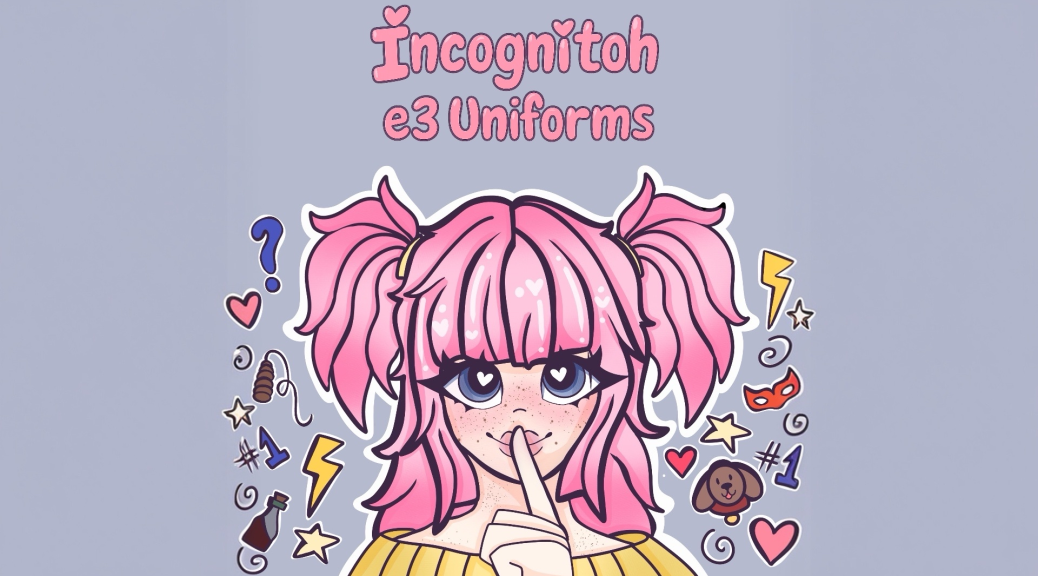
The uniforms reveal each contestant’s secret icon in the iconwear: a puppy for Zarah, masks for Madison, a whip for Hannah, a question mark for Ashley. The alliance forms quickly around the shared interest of making sure no one looks up. Madison, Hannah, and Zarah agree that Ashley is the target. The question becomes what’s actually in the uniform and how to use it.

Levels

Ashley discovers the answer first. The Neuroplex uniform contains haptic feedback technology that responds to gameplay performance. Kitty, whose super uniform aggregates all contestant feeds simultaneously, confirms this with the enthusiasm of someone who has been waiting to explain it.

Ashley starts playing to test the parameters. The Council watches. Bella runs the controls. The reward system begins doing what reward systems do: making itself feel necessary.

Truths

April calls everyone to the main room for the next challenge.Β  It’s an icebreak –Β  three truths and some lies.Β  It’s delivered to the group, then voted on.

The contestants rotate through confessional lines that blur together into a single composite portrait of desire, ambition, and concealed longing. Someone is a camgirl. Someone has a husband.

Most important, someone keeps dreaming about a specific woman every night.

Agent

Hannah and Ashley go opaque and private, ostensibly so Ashley can game without being watched. Hannah uses the cover to tell Ashley that the dreaming answer was hers, that it was real, that she means it. Ashley responds. The uniforms respond to Ashley responding. Hannah gets what she came for and files it away.

Double Agent

Hannah reports back to Madison. She got Ashley’s icon. She got more than that. Madison is impressed and not surprised. The alliance solidifies around Hannah’s willingness to do what it takes, which turns out to align precisely with what the uniform’s feedback system has been building toward anyway. Bella runs the controls directly.

The buzz goes stronger. Madison discovers she can run Hannah the way Bella runs the system. Kitty arrives because Hannah said her name. TheΒ squad is assembled. The immunity challenge is next and Madison already knows exactly what they’re going to do.


Listen & Explore


Explanation

Uniforms is where the Incognitoh arc reveals its second layer. The glass house established that transparency is coerced through the logic of suspicion. The uniforms establish that the body itself can be made into a compliance instrument.

The line between wanting something and being conditioned to want it dissolves faster than anyone expects when the feedback loop is well designed.

The haptic uniform is the arc’s most direct expression of desire horror’s central mechanism. The contestants aren’t forced into the feedback loop. Ashley discovers it while asking legitimate questions. She starts playing to test the parameters. The system rewards her for playing. Playing feels good. Stopping playing feels like leaving something on the table. By the time the Council is running the controls directly, the contestants are already doing most of the work themselves.

Madison’s discovery that she can run Hannah the way Bella runs the system is the episode’s most significant development. The control architecture doesn’t stop at Bella. It cascades. Everyone in the glass house is simultaneously a subject and an instrument, and the smartest player in the room is the one who figures out fastest how to be both at once.


Human Made Art

Series artwork is hand drawn by Echo Doll. Deep Dream State uses human art at every stage of the creative supply chain.


Consent Declaration

Deep Dream State is a desire horror audio drama written and produced by Neural Nets and Pretty Patterns. It explores psychological fiction at the boundaries of control, identity, and complicity. The manipulative elements depicted are fictional and intentional. Uniforms contains adult themes, suggestive content, haptic conditioning and surveillance dynamics.

All performances are works of fiction and take place within a consensual creative context. ISNI 0000 0005 2877 6254