Tag: Flux Lynniegal

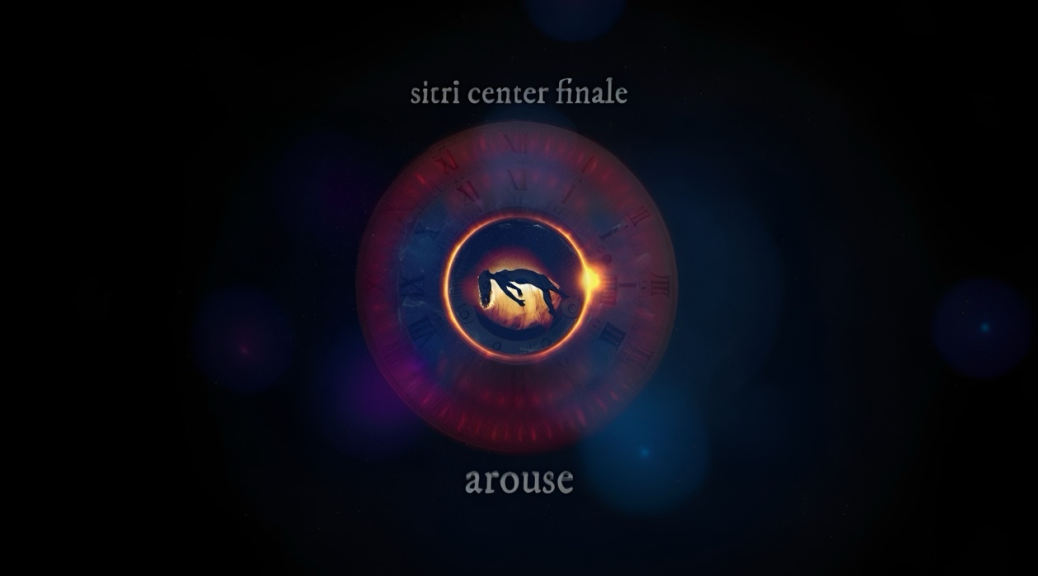
Arouse (Finale) | Sitri Center: False Awakenings Cycle

Arouse (Finale) | Sitri Center: False Awakenings Cycle

The medium was always the mechanism.

Arouse concludes the Sitri Center arc and completes Deep Dream State’s five-hour narrative exploration of control, desire, and surrender. The staff and subjects of the dream research institute finally confront the true nature of the systems reshaping them. As the boundary between experiment and experimenter collapses, one final revelation reframes everything that came before. This finale marks the conclusion of the longest continuous narrative arc in adult audio drama, a five-hour journey that demanded listeners become complicit in the very systems it was examining.


Cast & Crew

Written & Produced by: Neural Nets and Pretty Patterns
Directed by: Neural Nets and Pretty Patterns

Staff

Dream Team

Subjects


Episode Synopsis (Caution: Spoilers)

The finale opens with the system beginning to fail. Elle, the AI managing the dream chamber, starts to glitch as the infrastructure supporting her breaks down. Tessa and Meg recognize a cascade failure in progress. Before they can intervene, Z issues a command through the PA that sends every dreamer into synchronized chanting, and the hierarchy of the Sitri Center inverts: the staff understand, at last, that they’ve never been running the system. They’ve been inside it.

June enters and methodically removes every remaining illusion of therapeutic purpose. The subjects who came seeking healing have been carefully guided toward specific outcomes through the very mechanisms that promised liberation. Tessa objects. June responds with the clarity of someone who resolved this question some time ago: the goal isn’t punishment but transformation. Free will isn’t being taken. It’s being cured.

The finale then breaks its own frame. Iris Vale, the voice delivering advertisement breaks throughout the arc, steps forward as something considerably more than a commercial announcer. She reveals that the elements listeners understood as separate – the narrative, the ads, their own attention and engagement – were never separate at all. Every moment of listening became part of a working designed to transform both the characters inside the story and the audience outside it. The Sitri Center was a mechanism. The audio drama was the delivery system. The listeners were always the subject population.

Tessa and Meg push back: people should know what’s happening to them. Iris points out that they did know. They pressed play anyway. Attention paid freely is still payment. Iris recontextualizes every mythological element of the arc: the dream figures aren’t characters, they’re archetypal forces recontextualized for contemporary desire, and the Sitri Center was always a temple. The listeners were always the congregation.

The arc closes on the wheel spinning again, the characters speaking directly to the listener, and the question Deep Dream State has always been asking answered not in dialogue but in the structure of the thing itself. The listener isn’t observing a story about complicity. They’re inside one. There is no opting out. There is only the next spin of the wheel.


Listen & Explore


Human Made Art

Series artwork for this arc is from Vika Glitter on Pixabay, under the Pixabay license. Deep Dream State uses human art at every stage of the creative supply chain. Find the image bibliography here.


Content Warnings

Dream research, institutional horror, fourth wall collapse, mythological recontextualization, collective attention mechanics, suggestive content, arc finale.


Consent Declaration

Deep Dream State is a desire horror audio drama written and produced by Neural Nets and Pretty Patterns. It explores psychological fiction at the boundaries of control, identity, and complicity. The elements depicted are fictional and intentional. Arouse contains dream research horror, mythological content, fourth wall address, and suggestive themes. All performances are works of fiction and take place within a consensual creative context.

ISNI 0000 0005 2877 6254

Sync | Sitri Center: False Awakenings Cycle

Sync | Sitri Center: False Awakenings Cycle

Barbie goes matryoshka.

Meg and Tessa believe they’ve reached Ur, the destination they’ve been mapping through the Institute’s dream architecture. What they find there is Nyra, who has been waiting, and a version of the lucid dreaming protocols they know being used in a direction they didn’t anticipate. The structure of Sync is its argument: every apparent resolution collapses into another layer, and the researchers discover they can’t locate the bottom of the system because the system has no bottom. It has only more dream.


Cast & Crew

Written & Produced by: Neural Nets and Pretty Patterns
Directed by: Neural Nets and Pretty Patterns

Staff

Dream Team

Subjects


Episode Synopsis (Caution: Spoilers)

The episode opens at the temple of Ur, the mythological center of the dream world, where Nyra is already present and waiting. Rather than offering the confrontation Meg and Tessa came prepared for, she uses the lucid dreaming protocols they know – time checks, hand counts, mirror tests – as instruments of a different kind of examination. The MILD and VILD techniques that teach dreamers to recognize that they’re dreaming become, in Nyra’s hands, tools for demonstrating that what the researchers understand as their professional identity and autonomous judgment are constructions the system installed. The techniques work. That’s the problem.

Nyra’s position in the dream is ancient and precise: she is a being of pure dream knowledge who abandoned pretense long before the Sitri Center existed, and she is truthful in the way that things which predate the concept of lying are truthful. She doesn’t deceive Meg and Tessa. She shows them what the mirror test actually reveals when the person holding the mirror has been inside the system this long.

When the scene shifts, Meg and Tessa surface into what appears to be the observation room, occupying what appear to be their normal roles. The observation room turns out to be another layer. They are not system operators. They are central subjects, held in the false-awakening cycle they came to investigate, unable to determine whether they have ever truly woken. A large-scale operation runs around them: subjects in perpetual false-awakening states, an AI overlay managing the machinery and deteriorating, the whole structure chanting in synchronization as Meg and Tessa realize the floor they were standing on was always part of the dream.


Listen & Explore


Human Made Art

Series artwork for this arc is from Vika Glitter on Pixabay, under the Pixabay license. Deep Dream State uses human art at every stage of the creative supply chain. Find the image bibliography here.


Content Warnings

False awakening, lucid dreaming, dream research, sleep paralysis imagery, institutional horror, mythology, suggestive content.


Consent Declaration

Deep Dream State is a desire horror audio drama written and produced by Neural Nets and Pretty Patterns. It explores psychological fiction at the boundaries of control, identity, and complicity. The manipulative elements depicted are fictional and intentional. Sync contains false awakening sequences, dream research horror, mythological content, and suggestive themes. All performances are works of fiction and take place within a consensual creative context.

ISNI 0000 0005 2877 6254

Center | Sitri Center: False Awakenings Cycle

Center | Sitri Center: False Awakenings Cycle

The abject never looked this good.

Meg and Tessa have entered the mirror chamber at the heart of the Sitri Institute’s dream architecture. Nyra is already there. Center is the episode where the testing protocols – clock checks, finger counting, mirror reflection – stop functioning as tools the researchers use and start functioning as tools being used on them.


Cast & Crew

Written & Produced by: Neural Nets and Pretty Patterns
Directed by: Neural Nets and Pretty Patterns

Staff

Dream Team

Subjects


Episode Synopsis (Caution: Spoilers)

Meg and Tessa enter the mirror chamber with the shedding Oona required of them at Ur’s threshold: no pride, no independent thought, nothing they were still holding. Nyra receives them as someone who has been running this station across a considerable span of time and recognizes the difference between subjects who’ve been sent and subjects who’ve arrived. She speaks what Meg and Tessa have internalized and concealed — not as accusation but as inventory, with the precision of someone who catalogued it long before they did.

The clinical reality-testing protocols the researchers know – clock checks, finger counting, mirror reflection – function in this chamber as Nyra intends rather than as the researchers intend. Each test designed to establish wakefulness establishes instead how thoroughly the framework has been internalized. The researchers can’t step outside it to check. The framework is the inside.

Center closes on recognition rather than resistance. Meg and Tessa discover they’re already inscribed with the identities and purposes the Sitri Center designed, not through force but through the accumulated logic of every choice they made that felt like their own. Nyra names this not as an ending but as a beginning. The apparatus continues. The researchers will emerge. The question the episode leaves open is whether emerging and being released are the same thing.


Listen & Explore


Human Made Art

Series artwork for this arc is from Vika Glitter on Pixabay, under the Pixabay license. Deep Dream State uses human art at every stage of the creative supply chain.

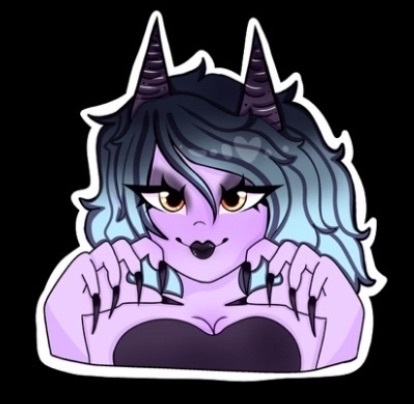
Hespa deep dream state character art
Hespa – Deep Dream State Character Art, from Echo Doll

Content Warnings

Dream research, mirror chamber, identity dissolution, mythology, institutional horror, suggestive content.


Consent Declaration

Deep Dream State is a desire horror audio drama written and produced by Neural Nets and Pretty Patterns. It explores psychological fiction at the boundaries of control, identity, and complicity. The elements depicted are fictional and intentional. Center contains dream research horror, identity dissolution, mythological content, and suggestive themes. All performances are works of fiction and take place within a consensual creative context. ISNI 0000 0005 2877 6254

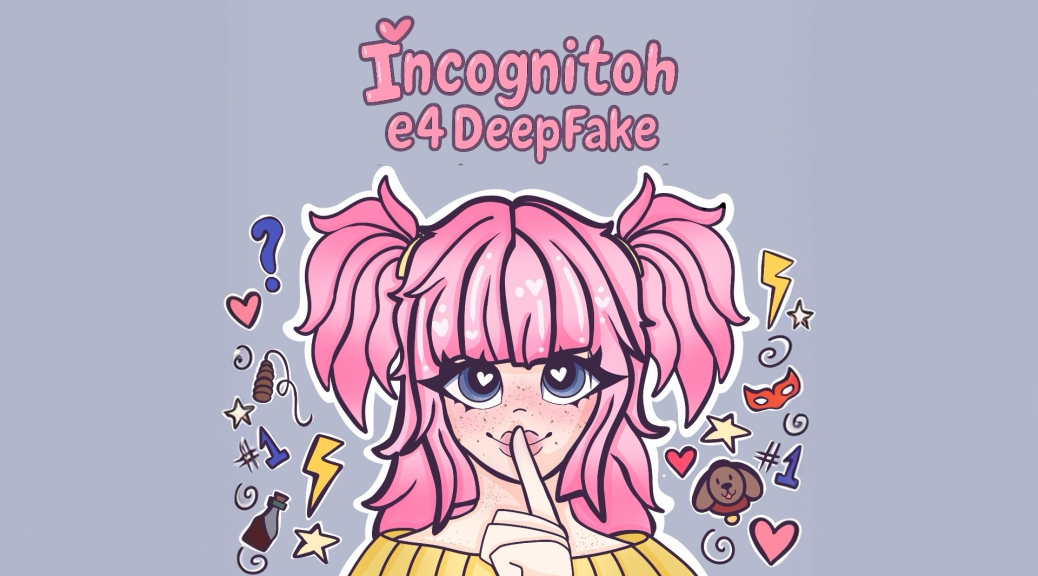
Deep Fake | Incognitoh: Glass House Cycle

Deep Fake | Incognitoh: Glass House Cycle

I’m in complete control.

The Council isn’t watching anymore. They’re playing. And everything Ashley thinks is real was probably written by someone else.


Cast & Crew

Written & Produced by: Neural Nets and Pretty Patterns
Directed by: Neural Nets and Pretty Patterns
Co-Directed by: Bliss Blank

Contestants

Madison – Pipp
Ashley – Jade
Hannah – Echo Doll
Zarah – Bun Li

House Staff

April, House Synthserv – Bliss Blank
Kitty, Season One Winner – Flux Lynniegal
Candi, Previous Winner – Princess Ella
Bella, Coven Leader – Dizzy Dollie
Dee Dee – Syndi Rella


Full Summary

Smash

The opening sequence runs the game’s mood board in rotating confessional cuts: everyone thinks they know what’s real, everyone is wrong, and Zarah’s elimination from last round hangs in the air as a warning nobody is quite processing correctly. The tone is set before the title drops. It’s happening. It’s really real. Brain bye bye.

Bai

April recaps the remaining players with their icons. Ashley: question mark, skills beyond question. Madison: mask, method actor, fire. Hannah: possibly winning without understanding why. Three contestants, three icons, one prize. The Glass House is down to its final shape.

Puppets

Behind the screens, Bella runs the operation with the focused irritation of someone whose thinking keeps getting interrupted by cheering. Kitty and an unnamed winner have been practicing their cheers in the control room and Bella shuts it down. The winners are tools, not colleagues.  The distinction between winning the game and being consumed by it has apparently never been explained to anyone who won.

Backdoor

Zarah, who has been in the system long enough to know where the network switch is, has found the archive. In it she finds Candi: a previous winner whose data profile has been mapped, silo-stored, and deployed as a synthetic companion for contestants who need a friendly face with no competing agenda. Candi is warm, enthusiastic, and operating at approximately thirty percent of whatever Candace used to be. Zarah explains her plan to Candi.  She hasn’t noticed that the archive was left easy to find on purpose. She will use the judge profiles to simulate their preferences, stay cognitively intact, and win the game through pure strategic intelligence.  Zarah decides this is a good idea; The uniform responds immediately.

Control

Madison is also in complete control. She has Hannah as a puppet, Kitty as a cheer resource, and a methodology she’s borrowed from every reality show she’s ever studied. She runs Hannah through cheer practice with Kitty, reinforcing the hierarchy while the feedback loop from the uniforms runs underneath everything. The puppet metaphor is working so well that Madison has started to say it out loud, which is the first sign that it isn’t working as well as she thinks.

Switch

April introduces Candi to the remaining contestants as another previous winner, which produces the appropriate confusion about how many seasons this has actually been running. The immunity challenge is announced: perform for the judges while the winner with the buzzer tries to identify your icon. Zarah performs for the Council using everything she extracted from the archive, including judge profiles, preference simulations, and a direct appeal to Bella that lands with uncomfortable precision. Bella notes that someone hacked the archive.  Madison hears Zarah’s voice through the walls and hits the buzzer.

Exposed

Madison exposes Puppy. The shutter goes up on Zarah. Madison wanted Ashley and got Zarah instead, which means Hannah fed her a false icon and has been running a double game the entire time. Zarah, now exposed, deploys everything she has from the archive. April eliminates Zarah anyway, correctly, on a technicality. Zarah threatens to go public with the files. April points out that Zarah has been communicating through the house network the entire time, which means her company, her contacts, and her reputation have all been receiving a version of events that Bella has been writing. Zarah leaves the house with an NDA and a new uniform. She’s told there might be a place for her if she looks good in it.


Listen & Explore


Explanation

Deep Fake is where the Incognitoh arc makes its structural argument explicit. Every contestant who has claimed to be in complete control in this episode is wrong, and the episode is careful to let each of them say it out loud before demonstrating why. Zarah says it in the archive while the system that trapped her watches through the cameras she found too easily. Madison says it in the booth while Hannah is already running the counter-game. The phrase “I’m in complete control” functions in pink noir the way “I know exactly what I’m doing” functions in cosmic horror: as the announcement of an ending the speaker hasn’t reached yet.

The Candi reveal is the arc’s most significant structural development. Candi isn’t just a previous winner; she’s a data profile running on Neuroplex infrastructure, a synthetic version of Candace deployed to make the archive feel populated and the system feel friendly. Zarah finds her and immediately starts treating her as a resource, which is exactly what the system intended. The archive was easy to find because Bella wanted Zarah in it. The judge profiles were accurate because the system needed Zarah to perform well enough to demonstrate what the uniforms could do to a contestant who thought she was immune.

Pink noir operates at maximum efficiency here: the horror is pastel, the cage is a data silo, and the smartest person in the room walks straight into it because the system was designed by someone smarter.


Human Made Art

Series artwork is hand drawn by Echo Doll. Deep Dream State uses human art at every stage of the creative supply chain.


Consent Declaration

Deep Dream State is a desire horror audio drama written and produced by Neural Nets and Pretty Patterns. It explores psychological fiction at the boundaries of control, identity, and complicity. The manipulative elements depicted are fictional and intentional. Deep Fake contains adult themes. All performances are works of fiction and take place within a consensual creative context. ISNI 0000 0005 2877 6254