Tag: ISNI 0000 0005 2877 6254

Raise | Vale Four: Tell Cycle

Raise | Vale Four: Tell Cycle

Everyone in Vale Four is getting read for filth. They deserve it.

FaceTrace is reading microexpressions before subjects know what they’re thinking, but June and Elle know they can’t afford a tell. So they’re practicing on each other, mapping their own blind spots before the real sessions begin.

Ava’s already figured out she’s being measured, and she wants more.


Cast & Crew

Written & Produced by: Neural Nets and Pretty Patterns
Directed by: Neural Nets and Pretty Patterns
Co-Directed by: Bliss Blank

Principal Cast


Explanation

Raise is the Tell Cycle’s most intimate entry and its most technically precise. The writing whisper device that carries June and Elle’s real communication underneath the performed neutrality of the FaceTrace sessions is the audio drama equivalent of the system they’re trying to beat: a layer of meaning running underneath the visible surface, audible to the listener but invisible to the apparatus watching the characters. June and Elle are doing in the monitor room exactly what the show is doing to its audience. The question Raise poses is whether awareness of a system’s mechanics protects you from it, or whether knowing the pattern is just another way of being inside it.

Ava’s answer arrives in real time during the Check scene. She identifies that she knows what’s being measured, knows what the images mean, and knows that her continued engagement is technically cheating. She keeps looking anyway. This is not weakness. It’s the most honest thing anyone says in the Tell Cycle: that understanding the mechanism doesn’t dissolve the want, and that the want was always more real than the methodology surrounding it. The machine registers this as optimal performance. Ava registers it as something she’d rather do alone.

The villain lair scene establishes that Meg has caught June and Elle gaming the sessions, and that Z already knew and finds it the most useful data they’ve produced. Perfect compliance is a dead system. June cheating isn’t a threat to the experiment. It is the experiment. The Softplay seduction that follows, Meg handing June access codes she frames as recognition, is the episode’s cleanest piece of commerce horror: a longer leash on a better-documented subject, delivered as a compliment. June calls it a trap. Meg says it isn’t. The episode doesn’t resolve which of them is right because both of them are.


Full Summary (Caution: Spoilers)

Hilton and Astoria open from the balcony, filling their assignent as Muppettes.

Vale Four is deploying FaceTrace, a system that reads microexpressions before the subject knows what they’re thinking, and the holdfasts inside can’t afford tells. Astoria tracks the logic cleanly. Hilton presses every button available while screaming. They arrive at the correct read together: whatever comes next depends on whether anyone inside can keep their face neutral under a system built specifically to prevent that.

In the monitor room, Ava walks in on June and Elle mid-session and announces that something is definitely wrong with this. June and Elle cover their prior activities.  They then fold her into the protocol as a witness, and run a FaceTrace sequence with her.

Ava identifies the monitor as a confessional, and she’s not wrong.

She describes the feeling of always knowing someone’s watching and needing to do it right. Elle and June pass written notes to each other in the writing whisper layer underneath the performed clinical neutrality, their real conversation running parallel to the session they’re staging. When an elevation sequence produces an image Ava recognizes as herself being chosen, her voice breaks. She tells them she knows what they’re measuring now, knows what the images mean, and that she’s still looking.

She asks if she can run solo sessions after hours.

In the conference room, Meg presents footage showing June and Elle coaching Ava through the FaceTrace sessions.  Iris diagnoses the cheating as stage fright rather than sabotage: they want to look good, they want Ava to trust them, they want to be liked. Z already knows and finds it the most productive data they’ve generated. A fully controlled system produces nothing worth studying. June is predictable under perceived autonomy; she’ll do exactly what they want as long as she believes she chose it.  They decide to let her run.

Meg visits June’s basement office and hands her access codes valid for every lab and system in the facility. She frames it as recognition of June’s value.  June identifies it immediately as a trap. Meg says it isn’t a trap, it’s recognition.  June takes the codes, despite her best instincts.

Alone with Synthserv 3.0 after hours, Ava submits to a compliance correlation sequence: positional instructions, image responses narrated in real time, each description more precise and more revealing than the one before. The machine tells her she never disappoints. Ava thanks it. The machine’s learning her.  She’s learning the machine.

By the time Raise ends, the distinction between those two things is trivial.


Listen & Explore


Human Made Art

The poster image for this arc is from Sunrise Forever on Pixabay, under the Pixabay license. Layer art overlays are used to vary each iteration of the image. Deep Dream State uses human art at every stage of the creative supply chain.


Consent Declaration

Deep Dream State is a desire horror audio drama written and produced by Neural Nets and Pretty Patterns. It explores psychological fiction at the boundaries of control, identity, and complicity. The elements depicted are fictional and intentional.  All performances are works of fiction and take place within a consensual creative context. ISNI 0000 0005 2877 6254

Hook Line | Vale Four: Hooks Cycle

Hook Line | Vale Four: Hooks Cycle

You already fell for it.

Hook Line is the second episode of the Vale Four arc and the Hooks Cycle.  The audience’s impulses drive the narrative. In desire horror, the audience always gets exactly what they want and then some.

In this case, you wanted the hook to work harder.

The music patterns spread beyond the lab and into the bodies of everyone within earshot. Celeste and Vera discover the staff isn’t immune. They’re just self-medicating.

June and Naia grow closer as Naia reframes total surrender as strategy.

Elle and Cael find something buried in the walls of Vale Four that shouldn’t exist: the document that could bring the whole IPO crashing down.

Elle has to convince two increasingly compromised women to trust her enough to testify.


Cast & Crew

Written & Produced by: Neural Nets and Pretty Patterns
Directed by: Neural Nets and Pretty Patterns
Co-Directed by: Bliss Blank

Recurring Cast

Z – Neural Nets and Pretty Patterns
June Lowell – Bliss Blank
Tessa Finn – Ring of Kees
Meg Aerin – Bun Li
Naia Anderson – Dizzy Dollie
Elle Lawson – Echo Doll
Iris Vale – Swirls and Twirls
Cael Yupp – Jericho Caine
Hespa Apate – Syndi Rella
Astoria – Dakota Dream
Hilton – Tickled Panda
Synthserv 3.0 – Valentina Vallay

Guest Stars

Vera – Fallen
Celeste – Panda Moanium


Scene By Scene Summary

Hooked

Celeste’s paranoia meets Vera’s pragmatism in the sleeping quarters.  When Vera produces something she lifted from the gym lockers, she offers a demonstration that reframes the entire premise: the staff aren’t resistant to the hooks.  They’re just managing them differently.  The scene ends on a moan that isn’t just two women; it’s a chorus.

Honeysuckle

June and Naia’s dynamic crystallizes in the garden nest.  June can see herself in the dorm.  She understands, viscerally, why the hooks work.  Naia reframes this not as vulnerability but as intelligence: knowing the system is the only real protection against it.  Their intimacy here is genuine, but layered with tactical subtext.

Treasure

Elle and Cael breach a room that isn’t on any floor plan.  What they find there is the load-bearing document of the entire Vale Four narrative: the original charter, paper only, no backup, establishing that if the IPO fails, control of everything reverts automatically to Meridian A and Naia. Vale Four assumed no one would ever get this far.  Elle and Cael just did.

Motif

Elle works the room.  Celeste and Vera have come to her because she never makes them feel stupid.  The scene is a masterclass in the desire horror genre’s central tension: the people being manipulated and the people doing the manipulating are often operating from the same place of genuine need.  Elle wants their testimony. Celeste and Vera want someone to tell them what’s happening to them is real.  Neither side is lying.  Both sides are working an angle.  Elle hands them a map with heart-shaped dots and calls them X marks.

Elle closes the episode by telling them to only tell people they can trust.  I think we can all see where this is headed.


Listen & Explore


Framework

The most effective systems of control don’t override your will. They recruit it like waow. By the time Celeste and Vera walk into that conference room, they aren’t victims looking for rescue. They’re participants looking for context. The horror is that the distinction might not matter.

Vale Four’s IPO isn’t just a financial event. It is the moment the system goes public. The attention, the compliance, and the conditioned response of every person inside the facility becomes a tradeable asset. “Hook Line” is the episode where that abstraction becomes a document with a clause and a deadline.


Human Made Art

The poster image for this arc is from Sunrise Forever, under the Pixabay license. Layer art overlays are used to vary each iteration of the image.  You can find the original here.


Consent Declaration

Deep Dream State is a desire horror audio drama written and produced by Neural Nets and Pretty Patterns.  It explores psychological fiction at the boundaries of control, identity, and complicity.  The manipulative elements depicted are fictional and intentional.  This is a story about what happens when consent is algorithmically removed, not a celebration of that process.  Vale Four explores audio conditioning and behavioral manipulation as horror.  The hooks in this episode are fictional. The science behind them is not. All performances are works of fiction and take place within a consensual creative context.


Chapters

Refrain (Premiere) | Vale Four: Hooks Cycle

Refrain (Premiere) | Vale Four: Hooks Cycle

“Is this bait?”

Refrain is the premiere episode of Vale Four, the fourth arc of the Deep Dream State desire horror series.  Desire horror is deeply immersive storytelling; the audience’s impulses drive the narrative.

Vale Four follows a covert operation to expose a corporate research facility before their IPO.  The facility picks up where Sitri left off.

Each Cycle tracks a different advertising technology.  They’re all real, although heavily fictionalized.   The first Cycle is about audio hooks – those engineered songs you can’t get out of your head.  (Noted examples include “Never Gonna Give You Up,” “Call Me Maybe,” and the Menard’s jingle.)

It is also about who built those systems, why, and what they were always actually for.  Vale Four lands at a moment when algorithmic manipulation and attention engineering are subjects of  public alarm (or they should be.)  We take them seriously as horror and philosophy.

Refrain introduces the facility, the focus group, the founders, and the fracture lines that’ll run through the entire arc.  It’s also an argument that the most unsettling thing a story can do is make you enjoy exactly what it is warning you about.


Cast & Crew

Written & Produced by: Neural Nets and Pretty Patterns
Directed by: Neural Nets and Pretty Patterns
Co-Directed by: Bliss Blank

Recurring Cast

Z – Neural Nets and Pretty Patterns
June Lowell – Bliss Blank
Tessa Finn – Ring of Kees
Meg Aerin – Bun Li
Naia Anderson – Dizzy Dollie
Elle Lawson – Echo Doll
Iris Vale – Swirls and Twirls
Cael Yupp – Jericho Caine
Hespa Apate – Syndi Rella
Astoria – Dakota Dream
Hilton – Tickled Panda

Guest Stars

Vera – Fallen
Celeste – Panda Moanium


Episode Summary

Naia Anderson hits record and starts testifying for her future.  Her future may well be ours.

Once the architect of a controversial neurological research program, Naia watched her work migrate from the academic shadows of Sitri into a sleek corporate project called Vale Four.  Officially, Vale Four studies advertising.  The sinister agenda might be below the surface – or it might be the surface itself.

On a remote island facility, paid participants believe they’re helping researchers study earworms and musical hooks.  The experiment seems harmless at first, but the hooks don’t stop when the lights go out.  They invade sleep, rewrite habits, and slowly erode the line between suggestion and control.  When one subject suddenly wakes up from the conditioning, she discovers just how much of her identity has been quietly rewritten.  Meanwhile, far from the lab, Naia watches the system she built evolve beyond its creators and begins planting the seeds for another kind of garden.


Listen & Explore


Human Made Art

The poster image for this arc is from Sunrise Forever, under the Pixabay license. Layer art overlays are used to vary each iteration of the image.  You can find the original here.


Consent Declaration

Deep Dream State is a desire horror audio drama written and produced by Neural Nets and Pretty Patterns.  The series uses desire horror to explore psychological fiction at the boundaries of control, identity, and complicity.  The manipulative elements depicted are fictional and intentional.  This is a story about what happens when consent is algorithmically removed, not a celebration of that process.  Vale Four explores audio conditioning and behavioral manipulation as horror.  The hooks in this episode are fictional. The science behind them is not. All performances are works of fiction and take place within a consensual creative context.


Arouse (Finale) | Sitri Center: False Awakenings Cycle

Arouse (Finale) | Sitri Center: False Awakenings Cycle

The medium was always the mechanism.

Arouse concludes the Sitri Center arc and completes Deep Dream State’s five-hour narrative exploration of control, desire, and surrender. The staff and subjects of the dream research institute finally confront the true nature of the systems reshaping them. As the boundary between experiment and experimenter collapses, one final revelation reframes everything that came before. This finale marks the conclusion of the longest continuous narrative arc in adult audio drama, a five-hour journey that demanded listeners become complicit in the very systems it was examining.


Cast & Crew

Written & Produced by: Neural Nets and Pretty Patterns
Directed by: Neural Nets and Pretty Patterns

Staff

Dream Team

Subjects


Episode Synopsis (Caution: Spoilers)

The finale opens with the system beginning to fail. Elle, the AI managing the dream chamber, starts to glitch as the infrastructure supporting her breaks down. Tessa and Meg recognize a cascade failure in progress. Before they can intervene, Z issues a command through the PA that sends every dreamer into synchronized chanting, and the hierarchy of the Sitri Center inverts: the staff understand, at last, that they’ve never been running the system. They’ve been inside it.

June enters and methodically removes every remaining illusion of therapeutic purpose. The subjects who came seeking healing have been carefully guided toward specific outcomes through the very mechanisms that promised liberation. Tessa objects. June responds with the clarity of someone who resolved this question some time ago: the goal isn’t punishment but transformation. Free will isn’t being taken. It’s being cured.

The finale then breaks its own frame. Iris Vale, the voice delivering advertisement breaks throughout the arc, steps forward as something considerably more than a commercial announcer. She reveals that the elements listeners understood as separate – the narrative, the ads, their own attention and engagement – were never separate at all. Every moment of listening became part of a working designed to transform both the characters inside the story and the audience outside it. The Sitri Center was a mechanism. The audio drama was the delivery system. The listeners were always the subject population.

Tessa and Meg push back: people should know what’s happening to them. Iris points out that they did know. They pressed play anyway. Attention paid freely is still payment. Iris recontextualizes every mythological element of the arc: the dream figures aren’t characters, they’re archetypal forces recontextualized for contemporary desire, and the Sitri Center was always a temple. The listeners were always the congregation.

The arc closes on the wheel spinning again, the characters speaking directly to the listener, and the question Deep Dream State has always been asking answered not in dialogue but in the structure of the thing itself. The listener isn’t observing a story about complicity. They’re inside one. There is no opting out. There is only the next spin of the wheel.


Listen & Explore


Human Made Art

Series artwork for this arc is from Vika Glitter on Pixabay, under the Pixabay license. Deep Dream State uses human art at every stage of the creative supply chain. Find the image bibliography here.


Content Warnings

Dream research, institutional horror, fourth wall collapse, mythological recontextualization, collective attention mechanics, suggestive content, arc finale.


Consent Declaration

Deep Dream State is a desire horror audio drama written and produced by Neural Nets and Pretty Patterns. It explores psychological fiction at the boundaries of control, identity, and complicity. The elements depicted are fictional and intentional. Arouse contains dream research horror, mythological content, fourth wall address, and suggestive themes. All performances are works of fiction and take place within a consensual creative context.

ISNI 0000 0005 2877 6254

Sync | Sitri Center: False Awakenings Cycle

Sync | Sitri Center: False Awakenings Cycle

Barbie goes matryoshka.

Meg and Tessa believe they’ve reached Ur, the destination they’ve been mapping through the Institute’s dream architecture. What they find there is Nyra, who has been waiting, and a version of the lucid dreaming protocols they know being used in a direction they didn’t anticipate. The structure of Sync is its argument: every apparent resolution collapses into another layer, and the researchers discover they can’t locate the bottom of the system because the system has no bottom. It has only more dream.


Cast & Crew

Written & Produced by: Neural Nets and Pretty Patterns
Directed by: Neural Nets and Pretty Patterns

Staff

Dream Team

Subjects


Episode Synopsis (Caution: Spoilers)

The episode opens at the temple of Ur, the mythological center of the dream world, where Nyra is already present and waiting. Rather than offering the confrontation Meg and Tessa came prepared for, she uses the lucid dreaming protocols they know – time checks, hand counts, mirror tests – as instruments of a different kind of examination. The MILD and VILD techniques that teach dreamers to recognize that they’re dreaming become, in Nyra’s hands, tools for demonstrating that what the researchers understand as their professional identity and autonomous judgment are constructions the system installed. The techniques work. That’s the problem.

Nyra’s position in the dream is ancient and precise: she is a being of pure dream knowledge who abandoned pretense long before the Sitri Center existed, and she is truthful in the way that things which predate the concept of lying are truthful. She doesn’t deceive Meg and Tessa. She shows them what the mirror test actually reveals when the person holding the mirror has been inside the system this long.

When the scene shifts, Meg and Tessa surface into what appears to be the observation room, occupying what appear to be their normal roles. The observation room turns out to be another layer. They are not system operators. They are central subjects, held in the false-awakening cycle they came to investigate, unable to determine whether they have ever truly woken. A large-scale operation runs around them: subjects in perpetual false-awakening states, an AI overlay managing the machinery and deteriorating, the whole structure chanting in synchronization as Meg and Tessa realize the floor they were standing on was always part of the dream.


Listen & Explore


Human Made Art

Series artwork for this arc is from Vika Glitter on Pixabay, under the Pixabay license. Deep Dream State uses human art at every stage of the creative supply chain. Find the image bibliography here.


Content Warnings

False awakening, lucid dreaming, dream research, sleep paralysis imagery, institutional horror, mythology, suggestive content.


Consent Declaration

Deep Dream State is a desire horror audio drama written and produced by Neural Nets and Pretty Patterns. It explores psychological fiction at the boundaries of control, identity, and complicity. The manipulative elements depicted are fictional and intentional. Sync contains false awakening sequences, dream research horror, mythological content, and suggestive themes. All performances are works of fiction and take place within a consensual creative context.

ISNI 0000 0005 2877 6254

Center | Sitri Center: False Awakenings Cycle

Center | Sitri Center: False Awakenings Cycle

The abject never looked this good.

Meg and Tessa have entered the mirror chamber at the heart of the Sitri Institute’s dream architecture. Nyra is already there. Center is the episode where the testing protocols – clock checks, finger counting, mirror reflection – stop functioning as tools the researchers use and start functioning as tools being used on them.


Cast & Crew

Written & Produced by: Neural Nets and Pretty Patterns
Directed by: Neural Nets and Pretty Patterns

Staff

Dream Team

Subjects


Episode Synopsis (Caution: Spoilers)

Meg and Tessa enter the mirror chamber with the shedding Oona required of them at Ur’s threshold: no pride, no independent thought, nothing they were still holding. Nyra receives them as someone who has been running this station across a considerable span of time and recognizes the difference between subjects who’ve been sent and subjects who’ve arrived. She speaks what Meg and Tessa have internalized and concealed — not as accusation but as inventory, with the precision of someone who catalogued it long before they did.

The clinical reality-testing protocols the researchers know – clock checks, finger counting, mirror reflection – function in this chamber as Nyra intends rather than as the researchers intend. Each test designed to establish wakefulness establishes instead how thoroughly the framework has been internalized. The researchers can’t step outside it to check. The framework is the inside.

Center closes on recognition rather than resistance. Meg and Tessa discover they’re already inscribed with the identities and purposes the Sitri Center designed, not through force but through the accumulated logic of every choice they made that felt like their own. Nyra names this not as an ending but as a beginning. The apparatus continues. The researchers will emerge. The question the episode leaves open is whether emerging and being released are the same thing.


Listen & Explore


Human Made Art

Series artwork for this arc is from Vika Glitter on Pixabay, under the Pixabay license. Deep Dream State uses human art at every stage of the creative supply chain.

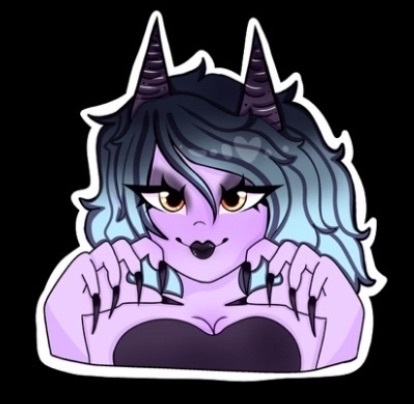
Hespa deep dream state character art
Hespa – Deep Dream State Character Art, from Echo Doll

Content Warnings

Dream research, mirror chamber, identity dissolution, mythology, institutional horror, suggestive content.


Consent Declaration

Deep Dream State is a desire horror audio drama written and produced by Neural Nets and Pretty Patterns. It explores psychological fiction at the boundaries of control, identity, and complicity. The elements depicted are fictional and intentional. Center contains dream research horror, identity dissolution, mythological content, and suggestive themes. All performances are works of fiction and take place within a consensual creative context. ISNI 0000 0005 2877 6254

Override | Sitri Center: Collective Dreaming Cycle

Override | Sitri Center: Collective Dreaming Cycle

Welcome to the Hive. Here come the queen bees.

Meg and Tessa surface from dreamlock not entirely sure what just happened, and Oona’s not going to let them forget it. The temple they descended into last entry turns out to be something else entirely: a blueprint, not a metaphor, its architecture a precise echo of the server infrastructure running underneath the Sitri Institute. The wheels are drives. The ducts are data channels. The naditu are packets. And the Hive is where consciousness goes when it stops asking questions and starts running on loop. Oona knows the way through. The price is everything they’re still holding onto.


Cast & Crew

Written & Produced by: Neural Nets and Pretty Patterns
Directed by: Neural Nets and Pretty Patterns

Principal Cast


Explanation

Override is  where the Sitri Center’s mythology becomes operational infrastructure. The reveal in S8 – that the temple Oona’s been navigating is a blueprint of the Institute’s server architecture – reframes everything Meg and Tessa have been mapping. The wheels are drives. The offering tables are edge gateways. The cooling system’s the splash. The naditu aren’t metaphors for data packets. They are data packets.

The Institute didn’t build a research facility that happened to echo ancient ritual geography. It built a consciousness processing system and dressed it in the only architecture that already knew how to do the job.

The Hive sequence is the arc’s most desire horror writing. The synchronized subjects running on loop, trading doubt for dopamine, locked into eternal yes – this is what complete alignment looks like from the inside. Oona presents it as a destination rather than a warning. Elle and June administer it with the cheerful efficiency of people who’ve already arrived. Tessa and Meg recognize the pattern as a map and read the code out of the wave before the loop can close around them. The question the sequence leaves open is whether recognition protects you or just makes the surrender more informed.


Full Plot Synopsis (Caution: Spoilers)

Meg and Tessa surface from dreamlock into the dream chamber, disoriented and uncertain about what just happened between them. Oona’s unsympathetic and delighted in equal measure. She confirms it was real and attributes it to muscle memory, citing the punishment relay as precedent. When Tessa redirects toward the temple, Oona describes it as a favorite: gorgeous layout, great acoustics, wheels that make you giggle until you cry. Tessa’s seen the layout before. She places it: the new server room. Meg follows the thread. The offering tables are edge gateways. The wheels are drives. The splashes are cooling systems. The architectural echo’s precise enough to be a blueprint rather than an allegory. If the dreamspace is encoding real infrastructure, the map they’ve been following is a source map — designed to process consciousness the same way the Institute processes information. Oona finds this extremely fucked and loves it. Tessa asks if her temple has sacrifice. Oona goes quiet. They agree they need to go back under. Oona knows where to get the code. Her condition: no flinching, no shame. It’s her dream.

Inside the Hive, synchronized subjects run on a loop, their consciousness reduced to numerical patterns cycling through stimulus and response. They traded doubt for dopamine. Elle and June administer the system with cheerful authority, keeping the whole row smiling, calling them program puppets. Tessa and Meg watch the wave and begin to read it: the pattern isn’t chaos, it’s a map, and they’ve seen it before. Step by step it resolves into coordinates. The sequence terminates in Ur. Tessa reads it first. Meg follows. They have the code.

Surfacing again, Meg and Tessa aren’t entirely themselves. The buzzies exchange that follows reveals the extent of what the Hive’s already done: Meg’s asking for reward in terms she didn’t arrive with, and Tessa’s startled enough to snap them both back. Oona’s unbothered. She describes what happened as a Pavlov lullaby rather than rewiring — no scalpel, no chip, just the brain doing what brains do when exposed to the right conditions at the right depth. Tessa calls it an override. Oona calls it a revelation. The distinction: she always knocks first. When Meg asks what happens if she knocks again, Oona smiles and says they’d find out how many doors they haven’t found yet. She declines to demonstrate. She says she’s on their side. They don’t fully believe her. She doesn’t need them to.

Oona explains the requirement for Ur: you don’t get through with pride, or thoughts, or anything you’re still holding. The door demands shedding, and dignity’s just the easiest place to start. Meg asks if they have to lose something. Oona says everything. The rest, she tells them, will be easy — it’s exactly what they asked for. They’ve got the answer key now. Meg and Tessa agree, sheepish and certain in equal measure.

Oona says heel, and they do.


Listen & Explore


Human Made Art

Series artwork for this arc is from Vika Glitter on Pixabay, under the Pixabay license. Deep Dream State uses human art at every stage of the creative supply chain.


Consent Declaration

Deep Dream State is a desire horror audio drama written and produced by Neural Nets and Pretty Patterns. It explores psychological fiction at the boundaries of control, identity, and complicity. The elements depicted are fictional and intentional. Override contains shared dreaming, behavior modification, hive mind imagery, desire horror themes, and suggestive content. All performances are works of fiction and take place within a consensual creative context.

ISNI 0000 0005 2877 6254

Artifact | Sitri Center: Collective Dreaming Cycle

Artifact | Sitri Center: Collective Dreaming Cycle

The Naditu Empire never ended.

Meg and Tessa are still inside the Institute and still losing ground. The restriction protocols are working. The pulse patterns are working. The wheel is on the schedule and they both know what that means. Their only remaining move is Oona Reyes: a prisoner with a court-ordered stay, a colorful file, and the rare ability to anchor multiple minds into a single shared dream. Oona has already dreamed the corridors they’ve been tracing. She knows where Ur is. She’ll take them there. Her conditions are non-negotiable and extremely reasonable.


Cast & Crew

Written & Produced by: Neural Nets and Pretty Patterns
Directed by: Neural Nets and Pretty Patterns

Principal Cast


Explanation

The Sitri Center stops being a research facility with ancient architecture underneath it and becomes the ancient architecture.

The TempleBridge documentation in the observation chamber is doing more than establishing Oona’s credentials. It’s establishing the pattern the Institute has always been running. Oona didn’t invent this at the compound. She inherited it.  They were all drawing from the same source.

The Ereshkigal sequence is the center. The nin-dur device, two subjects locked face-to-face on a wheel that tightens with each spin, is presented as ancient engineering with a precision that makes it more unsettling than any modern apparatus could be.

Oona she operates differently from every other subject in the facility. She is not confused. She is not being processed. She has already dreamed the map, she knows where Ur is, and her conditions are gummy clusters, Rivals support, and a decent wardrobe. That lightness is not a character flaw. It is the episode’s argument that the most dangerous person in the Institute is the one who went through the system before and came out the other side still finding it interesting.

Oona is not escaping. She’s going deeper. She just wants company.


Full Plot Synopsis (Caution: Spoilers)

Z opens with a direct address, distinguishing between his role as author of the series and his role as Z inside the Institute, before inviting the listener all the way under. Iris Vale follows with the Better Self Bridge Program advertisement, promising a private circle where heartbeats sync by design and a single cue unlocks a release the listener never knew they needed. The ad is not metaphor. It is a preview.

In the observation chamber, Meg and Tessa debrief the file on Oona Reyes: former pole dancer, fitness influencer, TikTok breakout, wellness guru, and most recently the subject of extensive legal documentation following the TempleBridge retreats she ran. The retreats lasted weeks. Mindsync headbands, embedded treatsticks, and ritual realignment produced  dream linking: a unified experience in which eight participants entered identical dream states.

In the service corridors, Meg and Tessa speak freely. The restriction protocols are in effect. The pulse patterns and the lotus and the wheel are on the schedule.  Their remaining move is the door they could not open at the end of Descendent, and to get through it they need someone who can build a hiding place inside a shared dream. They both know who that is.

In the dream chamber, Oona receives them with the ease of someone who has already seen this conversation coming. She has dreamed the corridors they have been tracing. She knows the path past the mirrored rooms, Sippar, the threshold chambers, and the Freudian nightmare parlor, right down to Ur. She’s been there.

When Meg and Tessa ask for her help, she agrees immediately, on the grounds that she is extremely bored. Her conditions: nerd gummy clusters on demand, reliable Rivals support, and a decent wardrobe.

Inside the shared dream, Oona delivers on her promise. The space is Ereshkigal: the first wheels, cuneiform on the walls that Meg can read because she coded her own Sumerian Duolingo as a special interest. Nyra greets them with the precision of someone who’s been running this operation for longer than the Institute has existed. She demonstrates the nin-dur device. Oona asks if there’s another available. Nyra tells her that a foreigner wishing to share with a priestess must first demonstrate knowledge of the rites. Oona indicates she knows all the rites.  The episode ends at the bell, with Nyra calling everyone to recite, and the full group assembled at the threshold of what comes next.


Listen & Explore


Human Made Art

Series artwork for this arc is from Vika Glitter on Pixabay, under the Pixabay license. Deep Dream State uses human art at every stage of the creative supply chain.


Content Warnings

Shared dreaming, ritual coercion, institutional surveillance, cult dynamics, Sumerian mythology, desire horror, power dynamics, haptic technology, submissive themes, loss of bodily autonomy, ancient ritual geography.


Consent Declaration

Deep Dream State is a desire horror audio drama written and produced by Neural Nets and Pretty Patterns. It explores psychological fiction at the boundaries of control, identity, and complicity. The elements depicted are fictional and intentional. Artifact contains shared dreaming,, institutional surveillance, Sumerian mythology, and desire horror themes. All performances are works of fiction and take place within a consensual creative context.


Producer ISNI

Maiden Voyage (Premiere) | The Chthonic: Maiden Cycle

Maiden Voyage (Premiere) | The Chthonic: Maiden Cycle

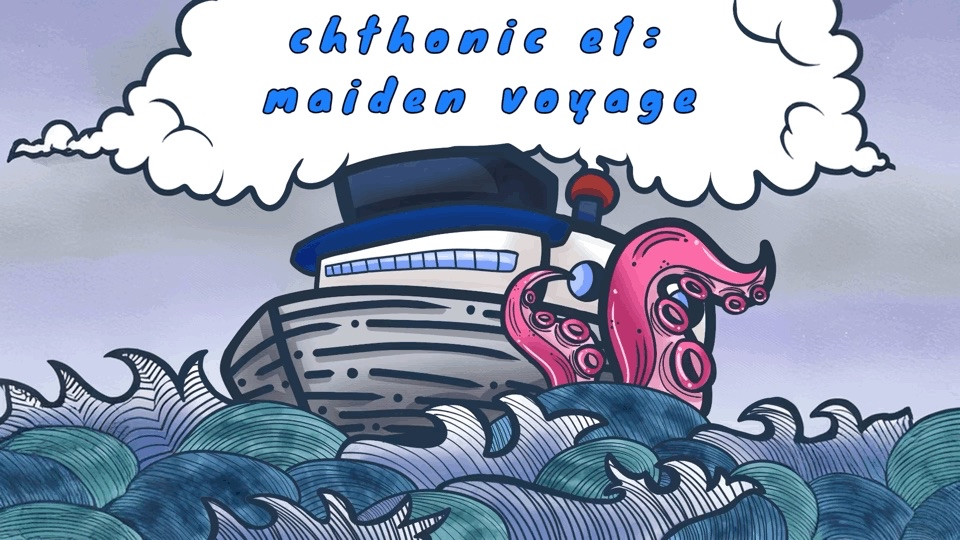
The Chthonic sets sail. And the sea does not forget.

The luxury cruise ship Chthonic embarks on a voyage overseen by the Dagon Dream Group. As passengers settle into their cabins and experience disturbing dreams, the ship’s leadership begins orchestrating something far more sinister. Behind the scenes, the captain and his associates identify vulnerable travelers and set a methodical plan in motion. What appears to be a luxury getaway conceals a coordinated conspiracy with mysterious depths.


Cast & Crew

Written & Produced by: Neural Nets and Pretty Patterns
Directed by: Neural Nets and Pretty Patterns
Co-Directed by: Bliss Blank

Ship’s Crew

Guests

    • Alistair, CEO of Neuroplex: Jericho Caine
    • Holly, His Girlfriend: Dizzy Dollie
    • Emma, The Bride-to-Be: Pipp
    • Brittany, Bridesmaid: Kitten Azazel
    • Kara, Bridesmaid: Tender Confusion
    • Sarah, Bridesmaid: Ring of Kees
    • Tiffany, Bridesmaid: Britt Reprogrammed

Full Plot Synopsis (Caution: Spoilers)

The cruise begins with Cruise Director Olivia Naylor greeting passengers and outlining the itinerary under the Dagon Dream Group banner. She promotes nightly bells, a wellness center managed by Mairead, and the Dagon app controlled by crew member Nikita. Captain Will Dyer, Chief Engineer Fion Morgan, and Chief Purser Selene round out the leadership presented to guests. The atmosphere appears welcoming and professionally managed.

In their cabin, bachelorette party guests Emma, Tiffany, Brittany, Kara, and Sarah share unsettling nocturnal experiences. Strange sounds come through the ship’s walls, and their collective nightmares involve tentacles and the sensation of being observed. When Captain Dyer and Olivia briefly check on them, the passengers mention nothing specific, and the leadership departs without investigation.

Behind closed doors, the captain confronts Olivia with explicit demands for absolute obedience tied to the tank and entities called the Old Ones, specifically invoking Abyssrath. Olivia submits without resistance. Later, Alistair Howell, owner of Neuroplex and the ship’s true architect, uses Olivia for control exercises and instructs her to identify new targets. Crew members Nikita, Mairead, and Fion witness the ship’s darker reality. Selene reveals that she has worked such vessels before and that formal complaints are deliberately ignored. She performs a cryptic shanty referencing judgment from the waters.

A casino night attracts Mairead, who is financially desperate and mathematically convinced she can gain advantage through high-stakes poker. She loses to Alistair and accumulates debt. Captain Dyer reviews surveillance footage and identifies Mairead as the ideal mark: vulnerable, broke, and isolated. Olivia agrees to leverage the ship’s systems, the nightly bell, and the Dagon app as tools for entrapment. The episode closes with the machine set in motion to deliver Mairead into the hands of those orchestrating the voyage.


Listen & Explore


Human Made Art

Series artwork for this arc was created by Echo Doll in collaboration with Neural Nets and Pretty Patterns. Deep Dream State uses human art at every stage of the creative supply chain.


Content Warnings

Cosmic horror, eldritch entities, ritual, surveillance, adult themes, dream manipulation.


Consent Declaration

Deep Dream State is a desire horror audio drama written and produced by Neural Nets and Pretty Patterns. It explores psychological fiction at the boundaries of control, identity, and complicity. The elements depicted are fictional and intentional. Maiden Voyage contains cosmic horror, ritual content, surveillance themes, and adult themes. All performances are works of fiction and take place within a consensual creative context.

ISNI 0000 0005 2877 6254

Chapters