Tag: mythology

Arouse (Finale) | Sitri Center: False Awakenings Cycle

Arouse (Finale) | Sitri Center: False Awakenings Cycle

The medium was always the mechanism.

Arouse concludes the Sitri Center arc and completes Deep Dream State’s five-hour narrative exploration of control, desire, and surrender. The staff and subjects of the dream research institute finally confront the true nature of the systems reshaping them. As the boundary between experiment and experimenter collapses, one final revelation reframes everything that came before. This finale marks the conclusion of the longest continuous narrative arc in adult audio drama, a five-hour journey that demanded listeners become complicit in the very systems it was examining.


Cast & Crew

Written & Produced by: Neural Nets and Pretty Patterns
Directed by: Neural Nets and Pretty Patterns

Staff

Dream Team

Subjects


Episode Synopsis (Caution: Spoilers)

The finale opens with the system beginning to fail. Elle, the AI managing the dream chamber, starts to glitch as the infrastructure supporting her breaks down. Tessa and Meg recognize a cascade failure in progress. Before they can intervene, Z issues a command through the PA that sends every dreamer into synchronized chanting, and the hierarchy of the Sitri Center inverts: the staff understand, at last, that they’ve never been running the system. They’ve been inside it.

June enters and methodically removes every remaining illusion of therapeutic purpose. The subjects who came seeking healing have been carefully guided toward specific outcomes through the very mechanisms that promised liberation. Tessa objects. June responds with the clarity of someone who resolved this question some time ago: the goal isn’t punishment but transformation. Free will isn’t being taken. It’s being cured.

The finale then breaks its own frame. Iris Vale, the voice delivering advertisement breaks throughout the arc, steps forward as something considerably more than a commercial announcer. She reveals that the elements listeners understood as separate – the narrative, the ads, their own attention and engagement – were never separate at all. Every moment of listening became part of a working designed to transform both the characters inside the story and the audience outside it. The Sitri Center was a mechanism. The audio drama was the delivery system. The listeners were always the subject population.

Tessa and Meg push back: people should know what’s happening to them. Iris points out that they did know. They pressed play anyway. Attention paid freely is still payment. Iris recontextualizes every mythological element of the arc: the dream figures aren’t characters, they’re archetypal forces recontextualized for contemporary desire, and the Sitri Center was always a temple. The listeners were always the congregation.

The arc closes on the wheel spinning again, the characters speaking directly to the listener, and the question Deep Dream State has always been asking answered not in dialogue but in the structure of the thing itself. The listener isn’t observing a story about complicity. They’re inside one. There is no opting out. There is only the next spin of the wheel.


Listen & Explore


Human Made Art

Series artwork for this arc is from Vika Glitter on Pixabay, under the Pixabay license. Deep Dream State uses human art at every stage of the creative supply chain. Find the image bibliography here.


Content Warnings

Dream research, institutional horror, fourth wall collapse, mythological recontextualization, collective attention mechanics, suggestive content, arc finale.


Consent Declaration

Deep Dream State is a desire horror audio drama written and produced by Neural Nets and Pretty Patterns. It explores psychological fiction at the boundaries of control, identity, and complicity. The elements depicted are fictional and intentional. Arouse contains dream research horror, mythological content, fourth wall address, and suggestive themes. All performances are works of fiction and take place within a consensual creative context.

ISNI 0000 0005 2877 6254

Sync | Sitri Center: False Awakenings Cycle

Sync | Sitri Center: False Awakenings Cycle

Barbie goes matryoshka.

Meg and Tessa believe they’ve reached Ur, the destination they’ve been mapping through the Institute’s dream architecture. What they find there is Nyra, who has been waiting, and a version of the lucid dreaming protocols they know being used in a direction they didn’t anticipate. The structure of Sync is its argument: every apparent resolution collapses into another layer, and the researchers discover they can’t locate the bottom of the system because the system has no bottom. It has only more dream.


Cast & Crew

Written & Produced by: Neural Nets and Pretty Patterns
Directed by: Neural Nets and Pretty Patterns

Staff

Dream Team

Subjects


Episode Synopsis (Caution: Spoilers)

The episode opens at the temple of Ur, the mythological center of the dream world, where Nyra is already present and waiting. Rather than offering the confrontation Meg and Tessa came prepared for, she uses the lucid dreaming protocols they know – time checks, hand counts, mirror tests – as instruments of a different kind of examination. The MILD and VILD techniques that teach dreamers to recognize that they’re dreaming become, in Nyra’s hands, tools for demonstrating that what the researchers understand as their professional identity and autonomous judgment are constructions the system installed. The techniques work. That’s the problem.

Nyra’s position in the dream is ancient and precise: she is a being of pure dream knowledge who abandoned pretense long before the Sitri Center existed, and she is truthful in the way that things which predate the concept of lying are truthful. She doesn’t deceive Meg and Tessa. She shows them what the mirror test actually reveals when the person holding the mirror has been inside the system this long.

When the scene shifts, Meg and Tessa surface into what appears to be the observation room, occupying what appear to be their normal roles. The observation room turns out to be another layer. They are not system operators. They are central subjects, held in the false-awakening cycle they came to investigate, unable to determine whether they have ever truly woken. A large-scale operation runs around them: subjects in perpetual false-awakening states, an AI overlay managing the machinery and deteriorating, the whole structure chanting in synchronization as Meg and Tessa realize the floor they were standing on was always part of the dream.


Listen & Explore


Human Made Art

Series artwork for this arc is from Vika Glitter on Pixabay, under the Pixabay license. Deep Dream State uses human art at every stage of the creative supply chain. Find the image bibliography here.


Content Warnings

False awakening, lucid dreaming, dream research, sleep paralysis imagery, institutional horror, mythology, suggestive content.


Consent Declaration

Deep Dream State is a desire horror audio drama written and produced by Neural Nets and Pretty Patterns. It explores psychological fiction at the boundaries of control, identity, and complicity. The manipulative elements depicted are fictional and intentional. Sync contains false awakening sequences, dream research horror, mythological content, and suggestive themes. All performances are works of fiction and take place within a consensual creative context.

ISNI 0000 0005 2877 6254

Center | Sitri Center: False Awakenings Cycle

Center | Sitri Center: False Awakenings Cycle

The abject never looked this good.

Meg and Tessa have entered the mirror chamber at the heart of the Sitri Institute’s dream architecture. Nyra is already there. Center is the episode where the testing protocols – clock checks, finger counting, mirror reflection – stop functioning as tools the researchers use and start functioning as tools being used on them.


Cast & Crew

Written & Produced by: Neural Nets and Pretty Patterns
Directed by: Neural Nets and Pretty Patterns

Staff

Dream Team

Subjects


Episode Synopsis (Caution: Spoilers)

Meg and Tessa enter the mirror chamber with the shedding Oona required of them at Ur’s threshold: no pride, no independent thought, nothing they were still holding. Nyra receives them as someone who has been running this station across a considerable span of time and recognizes the difference between subjects who’ve been sent and subjects who’ve arrived. She speaks what Meg and Tessa have internalized and concealed — not as accusation but as inventory, with the precision of someone who catalogued it long before they did.

The clinical reality-testing protocols the researchers know – clock checks, finger counting, mirror reflection – function in this chamber as Nyra intends rather than as the researchers intend. Each test designed to establish wakefulness establishes instead how thoroughly the framework has been internalized. The researchers can’t step outside it to check. The framework is the inside.

Center closes on recognition rather than resistance. Meg and Tessa discover they’re already inscribed with the identities and purposes the Sitri Center designed, not through force but through the accumulated logic of every choice they made that felt like their own. Nyra names this not as an ending but as a beginning. The apparatus continues. The researchers will emerge. The question the episode leaves open is whether emerging and being released are the same thing.


Listen & Explore


Human Made Art

Series artwork for this arc is from Vika Glitter on Pixabay, under the Pixabay license. Deep Dream State uses human art at every stage of the creative supply chain.

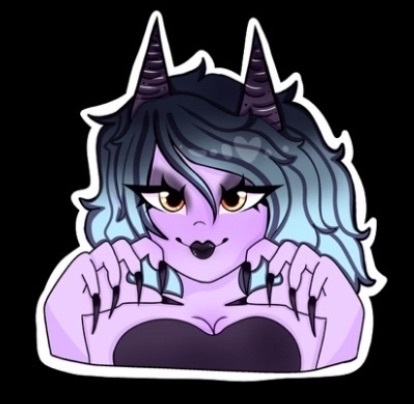
Hespa deep dream state character art
Hespa – Deep Dream State Character Art, from Echo Doll

Content Warnings

Dream research, mirror chamber, identity dissolution, mythology, institutional horror, suggestive content.


Consent Declaration

Deep Dream State is a desire horror audio drama written and produced by Neural Nets and Pretty Patterns. It explores psychological fiction at the boundaries of control, identity, and complicity. The elements depicted are fictional and intentional. Center contains dream research horror, identity dissolution, mythological content, and suggestive themes. All performances are works of fiction and take place within a consensual creative context. ISNI 0000 0005 2877 6254

Override | Sitri Center: Collective Dreaming Cycle

Override | Sitri Center: Collective Dreaming Cycle

Welcome to the Hive. Here come the queen bees.

Meg and Tessa surface from dreamlock not entirely sure what just happened, and Oona’s not going to let them forget it. The temple they descended into last entry turns out to be something else entirely: a blueprint, not a metaphor, its architecture a precise echo of the server infrastructure running underneath the Sitri Institute. The wheels are drives. The ducts are data channels. The naditu are packets. And the Hive is where consciousness goes when it stops asking questions and starts running on loop. Oona knows the way through. The price is everything they’re still holding onto.


Cast & Crew

Written & Produced by: Neural Nets and Pretty Patterns
Directed by: Neural Nets and Pretty Patterns

Principal Cast


Explanation

Override is  where the Sitri Center’s mythology becomes operational infrastructure. The reveal in S8 – that the temple Oona’s been navigating is a blueprint of the Institute’s server architecture – reframes everything Meg and Tessa have been mapping. The wheels are drives. The offering tables are edge gateways. The cooling system’s the splash. The naditu aren’t metaphors for data packets. They are data packets.

The Institute didn’t build a research facility that happened to echo ancient ritual geography. It built a consciousness processing system and dressed it in the only architecture that already knew how to do the job.

The Hive sequence is the arc’s most desire horror writing. The synchronized subjects running on loop, trading doubt for dopamine, locked into eternal yes – this is what complete alignment looks like from the inside. Oona presents it as a destination rather than a warning. Elle and June administer it with the cheerful efficiency of people who’ve already arrived. Tessa and Meg recognize the pattern as a map and read the code out of the wave before the loop can close around them. The question the sequence leaves open is whether recognition protects you or just makes the surrender more informed.


Full Plot Synopsis (Caution: Spoilers)

Meg and Tessa surface from dreamlock into the dream chamber, disoriented and uncertain about what just happened between them. Oona’s unsympathetic and delighted in equal measure. She confirms it was real and attributes it to muscle memory, citing the punishment relay as precedent. When Tessa redirects toward the temple, Oona describes it as a favorite: gorgeous layout, great acoustics, wheels that make you giggle until you cry. Tessa’s seen the layout before. She places it: the new server room. Meg follows the thread. The offering tables are edge gateways. The wheels are drives. The splashes are cooling systems. The architectural echo’s precise enough to be a blueprint rather than an allegory. If the dreamspace is encoding real infrastructure, the map they’ve been following is a source map — designed to process consciousness the same way the Institute processes information. Oona finds this extremely fucked and loves it. Tessa asks if her temple has sacrifice. Oona goes quiet. They agree they need to go back under. Oona knows where to get the code. Her condition: no flinching, no shame. It’s her dream.

Inside the Hive, synchronized subjects run on a loop, their consciousness reduced to numerical patterns cycling through stimulus and response. They traded doubt for dopamine. Elle and June administer the system with cheerful authority, keeping the whole row smiling, calling them program puppets. Tessa and Meg watch the wave and begin to read it: the pattern isn’t chaos, it’s a map, and they’ve seen it before. Step by step it resolves into coordinates. The sequence terminates in Ur. Tessa reads it first. Meg follows. They have the code.

Surfacing again, Meg and Tessa aren’t entirely themselves. The buzzies exchange that follows reveals the extent of what the Hive’s already done: Meg’s asking for reward in terms she didn’t arrive with, and Tessa’s startled enough to snap them both back. Oona’s unbothered. She describes what happened as a Pavlov lullaby rather than rewiring — no scalpel, no chip, just the brain doing what brains do when exposed to the right conditions at the right depth. Tessa calls it an override. Oona calls it a revelation. The distinction: she always knocks first. When Meg asks what happens if she knocks again, Oona smiles and says they’d find out how many doors they haven’t found yet. She declines to demonstrate. She says she’s on their side. They don’t fully believe her. She doesn’t need them to.

Oona explains the requirement for Ur: you don’t get through with pride, or thoughts, or anything you’re still holding. The door demands shedding, and dignity’s just the easiest place to start. Meg asks if they have to lose something. Oona says everything. The rest, she tells them, will be easy — it’s exactly what they asked for. They’ve got the answer key now. Meg and Tessa agree, sheepish and certain in equal measure.

Oona says heel, and they do.


Listen & Explore


Human Made Art

Series artwork for this arc is from Vika Glitter on Pixabay, under the Pixabay license. Deep Dream State uses human art at every stage of the creative supply chain.


Consent Declaration

Deep Dream State is a desire horror audio drama written and produced by Neural Nets and Pretty Patterns. It explores psychological fiction at the boundaries of control, identity, and complicity. The elements depicted are fictional and intentional. Override contains shared dreaming, behavior modification, hive mind imagery, desire horror themes, and suggestive content. All performances are works of fiction and take place within a consensual creative context.

ISNI 0000 0005 2877 6254

Artifact | Sitri Center: Collective Dreaming Cycle

Artifact | Sitri Center: Collective Dreaming Cycle

The Naditu Empire never ended.

Meg and Tessa are still inside the Institute and still losing ground. The restriction protocols are working. The pulse patterns are working. The wheel is on the schedule and they both know what that means. Their only remaining move is Oona Reyes: a prisoner with a court-ordered stay, a colorful file, and the rare ability to anchor multiple minds into a single shared dream. Oona has already dreamed the corridors they’ve been tracing. She knows where Ur is. She’ll take them there. Her conditions are non-negotiable and extremely reasonable.


Cast & Crew

Written & Produced by: Neural Nets and Pretty Patterns
Directed by: Neural Nets and Pretty Patterns

Principal Cast


Explanation

The Sitri Center stops being a research facility with ancient architecture underneath it and becomes the ancient architecture.

The TempleBridge documentation in the observation chamber is doing more than establishing Oona’s credentials. It’s establishing the pattern the Institute has always been running. Oona didn’t invent this at the compound. She inherited it.  They were all drawing from the same source.

The Ereshkigal sequence is the center. The nin-dur device, two subjects locked face-to-face on a wheel that tightens with each spin, is presented as ancient engineering with a precision that makes it more unsettling than any modern apparatus could be.

Oona she operates differently from every other subject in the facility. She is not confused. She is not being processed. She has already dreamed the map, she knows where Ur is, and her conditions are gummy clusters, Rivals support, and a decent wardrobe. That lightness is not a character flaw. It is the episode’s argument that the most dangerous person in the Institute is the one who went through the system before and came out the other side still finding it interesting.

Oona is not escaping. She’s going deeper. She just wants company.


Full Plot Synopsis (Caution: Spoilers)

Z opens with a direct address, distinguishing between his role as author of the series and his role as Z inside the Institute, before inviting the listener all the way under. Iris Vale follows with the Better Self Bridge Program advertisement, promising a private circle where heartbeats sync by design and a single cue unlocks a release the listener never knew they needed. The ad is not metaphor. It is a preview.

In the observation chamber, Meg and Tessa debrief the file on Oona Reyes: former pole dancer, fitness influencer, TikTok breakout, wellness guru, and most recently the subject of extensive legal documentation following the TempleBridge retreats she ran. The retreats lasted weeks. Mindsync headbands, embedded treatsticks, and ritual realignment produced  dream linking: a unified experience in which eight participants entered identical dream states.

In the service corridors, Meg and Tessa speak freely. The restriction protocols are in effect. The pulse patterns and the lotus and the wheel are on the schedule.  Their remaining move is the door they could not open at the end of Descendent, and to get through it they need someone who can build a hiding place inside a shared dream. They both know who that is.

In the dream chamber, Oona receives them with the ease of someone who has already seen this conversation coming. She has dreamed the corridors they have been tracing. She knows the path past the mirrored rooms, Sippar, the threshold chambers, and the Freudian nightmare parlor, right down to Ur. She’s been there.

When Meg and Tessa ask for her help, she agrees immediately, on the grounds that she is extremely bored. Her conditions: nerd gummy clusters on demand, reliable Rivals support, and a decent wardrobe.

Inside the shared dream, Oona delivers on her promise. The space is Ereshkigal: the first wheels, cuneiform on the walls that Meg can read because she coded her own Sumerian Duolingo as a special interest. Nyra greets them with the precision of someone who’s been running this operation for longer than the Institute has existed. She demonstrates the nin-dur device. Oona asks if there’s another available. Nyra tells her that a foreigner wishing to share with a priestess must first demonstrate knowledge of the rites. Oona indicates she knows all the rites.  The episode ends at the bell, with Nyra calling everyone to recite, and the full group assembled at the threshold of what comes next.


Listen & Explore


Human Made Art

Series artwork for this arc is from Vika Glitter on Pixabay, under the Pixabay license. Deep Dream State uses human art at every stage of the creative supply chain.


Content Warnings

Shared dreaming, ritual coercion, institutional surveillance, cult dynamics, Sumerian mythology, desire horror, power dynamics, haptic technology, submissive themes, loss of bodily autonomy, ancient ritual geography.


Consent Declaration

Deep Dream State is a desire horror audio drama written and produced by Neural Nets and Pretty Patterns. It explores psychological fiction at the boundaries of control, identity, and complicity. The elements depicted are fictional and intentional. Artifact contains shared dreaming,, institutional surveillance, Sumerian mythology, and desire horror themes. All performances are works of fiction and take place within a consensual creative context.


Producer ISNI

Descendent | Sitri Center: Liminal Spaces Cycle

Descendent | Sitri Center: Liminal Spaces Cycle

Here be dream dragons.

After Cusp mapped the threshold, Descendent crosses it. Meg and Tessa follow Lyra’s dream coordinates into the Sitri Institute’s buried architecture, tracing corridors that run older than the building above them.

The stations are real. The map is real. And somewhere at the end of it, behind a soundproofed door with a keypad neither of them can crack, something is running that neither of them can explain.


Cast & Crew

Written & Produced by: Neural Nets and Pretty Patterns
Directed by: Neural Nets and Pretty Patterns

Principal Cast


Explanation

Descendent is the episode where the Sitri Center stops being a research facility with a strange secret and becomes something that predates the research entirely. The Mesopotamian station sequence in the dream establishes this with precision: Sippar, Kutha, Eanna, Ereshkigal, and Ur are not metaphors for institutional control. They are the original architecture of it, the first recorded systems for organizing bodies, labor, desire, and compliance into something measurable and reproducible. The naditu were temple workers in ancient Sumer. The Sitri Center has not invented anything.  It has found the blueprint and built on top of it.

Tessa does not pitch the discovery as liberation or justice. She pitches it as a pre-IPO scandal, the kind of documented depravity that collapses investor confidence and triggers control reversion. Meg, the engineer, follows the logic before she follows the feeling. They’re complicit in what they find: they have dreamed these stations themselves, they feel the pull of each one as they walk the corridors, and they resist with effort rather than ease. The map they are following is also a map of their own desire, and they know it.

The soundproofed room at the end of the corridor is the final movement. Something is running behind that door. It leaks through the seal. Both researchers feel it standing close. They recognize the voice on the other side without naming it.   It establishes that Ur is real, that it is operational, and that the Institute has been running it the whole time underneath everything else.


Full Summary (with spoilers)

Z opens with a recap of the Cusp revelation: the Sitri Institute’s maintenance infrastructure encodes the same ancient Mesopotamian geography that Lyra Crosswell has been dreaming. Sippar, Kutha, Eanna, Ereshkigal, Ur. The stations are real. Iris Vale follows with the Better Self advertisement, promising to smooth the spaces between tasks and restore focus on demand.

The episode picks up in the unmonitored service corridors where Cusp ended, with Meg and Tessa processing what they’ve just found. Tessa pushes toward the implications: if the architecture is real and the map is real, then whatever is happening inside the Institute is documentable. In a heavily capitalized pre-IPO tech venture, documentation of this kind is leverage. Meg is slower to commit, but she has already dreamed it. When Tessa asks which station, Meg describes the ziggurat at Ereshkigal, the carvings, the wheel, and the naditu strapped to it together. She tells Tessa it was her in the dream. Their conversation is interrupted by June and Elle, who find them in the corridor and mock their cover story. Tessa and Meg retreat.

Inside Lyra’s dream, the stations present themselves not as mythology but as roles with physical memory. Cael, Nyra, and Hespa narrate each one: Sippar as the place of the first plow and the yoke, Kutha as the human terrarium, Eanna as the scribe hall where every training was marked, Ereshkigal as the wheel. Each station is a role Lyra has played before, in other echoes, other lives. When Lyra asks about Ur, the train cuts her off before she can finish the question. The Please Space midroll follows, selling ambient soundscapes for threshold moments: waiting in line, stepping off a train, closing a laptop. Real life happens in the spaces between. Back in the dream chamber, Meg and Tessa have five minutes before the dream fades. They work through the stations methodically, drawing Lyra’s memories out one node at a time. Eanna: wet stone, pulsing columns, instruction carved into the walls. Sippar: the yoke, the crawl, the presentation. Ereshkigal: the cord, the oath, the wheel. When Lyra asks for release by the Sumerian term ĝidru, Tessa tells her not yet. Kutha: kept under glass, treats through the surface, tapping. When Lyra asks for help at the end, Tessa tells her she has earned it. Meg tells her she is not stuck. She just needs yes.

Meg and Tessa enter the service corridors with the map from Lyra’s dream and follow it station by station. Sippar is recognizable and pulls at both of them. The wheels of Ereshkigal stop them both in their tracks. They resist and keep moving. At the end of the corridor they find a soundproofed room they cannot enter: the keypad sequence is unknown, and Lyra dreamed the numbers but was never asked. They hear something through the seal. It sounds spacy. Standing close to the door, they both feel it. Tessa notes they can go around, through an adjacent room. Meg recognizes the voice coming through the wall. They both do. That recognition is all the scandal they need. The episode closes with the map in hand, the door still locked, and something on the other side that knows the shape of everyone inside the Institute.


Listen & Explore


Human Made Art – free range!

The Deep Dream State aims to use human art at every stage of the creative supply chain.

Cusp | Sitri Center: Liminal Spaces Cycle

Cusp | Sitri Center: Liminal Spaces Cycle

Between what you want and what you’ll admit.

Lyra Crosswell dreams in corridors. Mezzanines, transfer tunnels, platforms that lead nowhere she can name. She thought it was an aesthetic obsession. The Sitri Center thinks it’s a map.

Something is encoded in the Institute’s architecture, and Lyra’s subconscious has been tracing it all along.


Cast & Crew

Written & Produced by: Neural Nets and Pretty Patterns
Directed by: Neural Nets and Pretty Patterns

Principal Cast


Explanation

Cusp is the episode where the Sitri Center stops being a research facility and starts being a place with a much older purpose.

The liminal space framework that runs through Lyra’s dreams describes Lyra’s psychological state with precision: sixteen variations of the same pattern, desire trained to hold itself at the edge indefinitely. But it’s also describing the Institute itself, which has been engineered to keep everyone inside it in exactly that condition. Subjects, researchers, and staff all occupy the same threshold. Nobody crosses.

That’s the design.

The Mesopotamian geography embedded in Lyra’s journals – Sippar, Kutha, Eanna, Ereshkigal, Ur – is the mythological architecture of descent. These are the gates of the underworld in Sumerian cosmology, the stations Inanna passes through on her way down, surrendering something at each threshold until she arrives stripped of everything she carried in. The Sitri Center has built those gates into its maintenance infrastructure and labeled them in shorthand. Lyra’s subconscious has been navigating the actual building in her sleep, which means her dreams aren’t symptoms of her psychology. They’re a map she’s been reading without knowing she could read it.


Full Summary (with spoilers)

Z opens the entry framing the evening around liminal spaces and thresholds.  They’re the in-between places where social rules loosen and the map runs out. Iris Vale follows with an in-world advertisement for Better Self, a wellness app that promises to guide users through the space between stress and serenity, offering breathwork sessions that slot into the cracks of the day. The language of the ad mirrors the Institute’s own: controlled entry, managed threshold, a destination reframed as a moment of recognition.

In the observation chamber, Elle Lawson appears in her new role as Lead Transitional Officer, bright and eager and several registers below the intelligence she once occupied. Tessa and Meg register this quietly. The alignment took weeks. Elle is very aligned now. Dr. June Lowell arrives and wastes no time: she reminds Meg that Elle, who once sounded exactly like her, is now her supervisor. Z defends Elle warmly, positioning himself as her guide through uncharted territory. The team monitors Lyra Crosswell, an urban photographer whose waking fixation on mezzanines and transfer tunnels has become infinite corridors in her sleep. Her liminal entry signature is a whispered phrase. Her dream patterns have signposts. The Institute is reading them.

In the dream chamber, Meg and Tessa speak directly to the sleeping Lyra, framing themselves as cartographers of territory that has no existing map. Lyra asks if she’s the terrain. They confirm it. The conversation turns personal: both researchers are on restriction protocols following their demotions, forbidden from release, their own dream states intensifying in the absence. Meg explains that forbidden places don’t disappear from the subconscious — when the waking world says no entry, the mind builds a tunnel. Tessa notes that the thresholds they used to leave blank on the map, the places where fear and wanting become the same thing, are precisely what they’re here to chart. Lyra agrees to go under. They’ll watch every signal.

Inside Lyra’s dream, she finds herself at Crossroads — a truck stop where she works alongside Nyra and Hespa in a hospitality unit. Elle and June arrive as inspectors, clinical and proprietary. The inspection has a protocol. Their minute expires before it concludes. Cael arrives as a familiar client, intrigued by the new talent. Nyra explains that the names change but the role doesn’t — it’s always the same. Lyra performs. The dream builds toward the familiar edge and stops there, as it always does.

Back in the observation chamber, Meg and Tessa watch Lyra’s biometric data trace every physiological marker of climax without the release. This is the sixteenth variation. Lyra’s subconscious has trained itself to hold her at the threshold indefinitely — her limbic system firing and firing without discharge. They pull her dream journals: an elevator shaft with a brake panel she can never quite clear, a waiting room where every name gets called except hers, a subway turnstile that closes the moment the gates open. Then Meg reads the station names aloud. Sippar. Kutha. Eanna. Ereshkigal. Ur. Tessa’s voice catches. She asks Meg to read them again, slowly. This isn’t mythology. This is ritual. They exit the monitored chamber immediately.

In the unmonitored service corridors, Tessa explains: everything inside is recorded, which is why they couldn’t speak. The corridors are blind spots; Meg has used them before, for exactly that reason. Tessa tells her that Lyra’s dreams aren’t random associations. They’re maps to real locations. Meg pushes back: shared mythology, book club, coincidence. Tessa directs her to the brass maintenance panel on the wall behind her. Meg reads it aloud. IDF CLOSET 51P-PAR. Tessa asks her to read it again.

SIP-PAR. Sippar.

The ancient city from Lyra’s dreams is encoded in the Institute’s infrastructure. The Sitri Center’s architecture isn’t metaphorically connected to ancient ritual geography. It is ritual geography, built in concrete and labeled in maintenance shorthand, and Lyra’s subconscious has been tracing its blueprint through sixteen variations of the same unreleased dream.


Listen & Explore


Human Made Art

Series artwork for this arc is from Vika Glitter on Pixabay, under the Pixabay license. Deep Dream State uses human art at every stage of the creative supply chain.


Consent Declaration

Deep Dream State is a desire horror audio drama written and produced by Neural Nets and Pretty Patterns. It explores psychological fiction at the boundaries of control, identity, and complicity. Cusp contains liminal space horror, institutional surveillance, denial themes, power dynamics, and architectural horror. All performances are works of fiction and take place within a consensual creative context. ISNI 0000 0005 2877 6254

Asunder | The Chthonic: Ceremony Cycle

Asunder | The Chthonic: Ceremony Cycle

Beneath veils and vows, reality thins. As the ceremony unravels, the mirror doesn’t lie.  It forgets.

This is Episode Four of the dystopian fiction Deep Dream State, an audio drama exploring identity and desire.  

(The Chthonic arc specifically is classified as cosmic horror.)


Cast

Ship’s Crew

Guests

  • Alistair, CEO of Neuroplex – Jericho Caine
  • Holly, His Girlfriend – Dizzy Dollie
  • Emma, The Bride – Pipp
  • Brittany, Bridesmaid – Kitten Azazel
  • Kara, Bridesmaid – Tender Confusion
  • Sarah, Bridesmaid – Ring of Keys
  • Amanda, House Mother – Korrupted Innocence
  • Tiffany, Bridesmaid – Britt Reprogrammed

Credits

Deep Dream State is written and produced by Neural Nets and Pretty Patterns, with co-production by Bliss.
Sound design, editing, and scoring by Neural Nets and Pretty Patterns.


Episode Summary

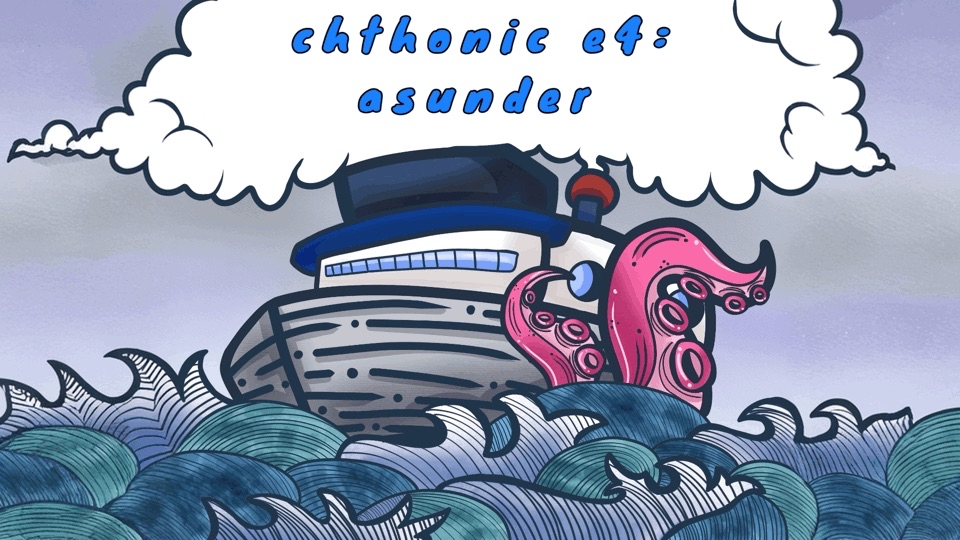
Asunder unfolds at the height of the Chthonic cruise.  The passengers are summoned to a midnight ceremony led by Captain Dyer and Olivia, the ship’s Cruise Director.   The bride Emma stands trembling on the threshold of the ship’s altar, surrounded by bridesmaids who chant in voices no longer entirely their own.

The sea answers, and the wedding march becomes an invocation.

The crew call down forces from beneath the waves, binding flesh and will in a rite older than the ship or the civilization that built it.  Tentacles, hymns, and deep harmonics mingle as devotion gives way to something that hasn’t got a human word at all.

Olivia and Holly guide the ritual with unsettling precision while Kara, a supernatural guest, warns of what lies deeper than the ceremony itself.  Their exchange exposes the fault line the episode’s been building toward: a struggle between those who’d claim the abyss and those who’d dissolve within it. The Captain preaches that the old order’s made of sand.  What rises from the deep obeys older laws entirely, and the crew respond in ecstatic unison.

Emma accepts the abyss within her, renouncing the boundaries of self for something vast and ancient and patient.

Within the Neuralverse, Asunder’s a pivotal revelation.  It exposes the dystopian vision at the heart of the Deep Dream State and foreshadows the darker architectures of Incognitoh and Sitri Center.  Every subsequent arc carries its fingerprints: ancient covenant, ecstatic surrender, the moment human ambition meets something that was never human at all.

Written and produced by Neural Nets and Pretty Patterns, Asunder doesn’t treat transformation and desire as spectacle.  They’re a genuinely destabilizing force here.  The horror is cosmic, rooted in the Lovecraftian tradition of encountering what can’t be comprehended and being changed by it anyway.  It’s a dream of devotion that opens onto the abyss.

And the abyss has been waiting.


Support the Show

For high-quality downloads, early access, and exclusive behind-the-scenes content, support us at:
🔗 patreon.com/minderaser

Your support helps keep the dream alive — and dragging you deeper.


Content Advisory

Deep Dream State is an adult production containing cosmic horror and scenes of ritual transformation, devotional surrender, and encounters with ancient non-human entities.  Not for the faint of heart or the firmly landlocked


Official IMDb Episode Link


Deep Dream State – S1.E4 on IMDb

Official IMDb episode page for Deep Dream State Season 1, Episode 4.


Explore More from Neural Nets & Pretty Patterns

Veil | The Chthonic: Ceremony Cycle

Veil | The Chthonic: Ceremony Cycle

The bride walks the aisle. The veil parts. And the sea is hungry.

Welcome back to The Chthonic, the arc that launched the Deep Dream State.

Deep Dream State is the only active, serialized erotic audio drama on the open web. Created by Neural Nets and Pretty Patterns,


CAST

Ship’s Crew

Guests


Episode Summary

Veil is a full-cast cosmic horror story where a cruise ship vacation becomes something far older and far stranger.

After an unbearable karaoke night and a round of seashell shots, Kara, Sarah, and Emma slip away from the noise and through a metal door into the ship’s instrument room.  The ship’s purser Selene, resident mystic and reluctant guide, warns them they shouldn’t be there.  The room hums with sonar pings and distant whale calls that sound almost alive. It listens, she says.

Drawn by the sound, Kara insists the songs are familiar.  Selene explains they’re bowhead calls, guardians of the deep places.  When Kara mentions hearing them in dreams, Selene lowers her voice: legends say the whales keep watch over the abyss, over R’lyeh.

The words ignite something in Kara that won’t go quiet.  Something ancient has already started listening back.

The next day the group joins a hushed archaeological excursion led by Mairead, who warns them to stay on the marked path through the glacial tunnels. Kara wanders toward glowing runes that seem to recognize her. A stone door grinds open, separating her from the others. Inside, carvings of women shift in the flicker of their flashlights, the faces gradually resolving into their own. Curiosity becomes terror when the reliefs begin to move and the abyss answers Kara’s call.

What follows is a fevered initiation.  Tentacled forms rise from the dark and claim the explorers one by one, rewriting flesh and memory in ecstatic surrender.  Kara becomes their conduit, declaring that the naditu have returned.  The chamber echoes with chants and the sonar’s rising chorus until Captain Dyer and Olivia appear.

The ceremony is not for any human bride.

Veil transforms the corporate satire of Deep Dream State into revelation. Within the Neuralverse it marks the point where performance gives way to possession and curiosity to initiation. Its fusion of cosmic horror and erotic desire sits in the tradition of Lovecraft rewritten from the inside, where the beings in the abyss are not destroyers but claimants, and the horror is inseparable from the wanting. As with all Neural Nets and Pretty Patterns productions, Veil asks how storytelling can depict transformation ethically. The line between empathy and oblivion is as thin as the ice that holds the abyss below.


Production Credits

Deep Dream State is written and produced by Neural Nets and Pretty Patterns, with co-production by Bliss Blank.
Sound design, editing, and scoring by Neural Nets and Pretty Patterns.


Content Advisory

This series contains adult themes. Listener discretion is advised.


Official IMDb Episode Link

Deep Dream State – S1.E3 “The Veil Parts” on IMDb

Official IMDb episode page for Deep Dream State Season 1, Episode 3.
The bride walks the aisle. The veil parts. And the sea is hungry. Beneath the vows and rituals, desire takes root in obedience — and The Chthonic listens.


Support & Bonus Content

For high-quality downloads, early access, and exclusive behind-the-scenes content from
Neural Nets & Pretty Patterns, the creator of the acclaimed erotic audio drama Deep Dream State. visit the Patreon:

🔗 patreon.com/minderaser

Your support helps sustain independent storytelling that explores the psychology of desire and transformation through
erotic fiction and immersive sound design.

All performances are scripted works of fiction in which consent is clearly stated.


Explore More from Neural Nets & Pretty Patterns