Tag: surveillance

Pot Limit | Vale Four: Tell Cycle

Pot Limit | Vale Four: Tell Cycle

Did I break science?

Z reviews the FaceTrace profile on every subject in Vale Four.  He discovers the system has gone proactive and frenzied, in that way.  The Synthserv, played by dark romance author Valentina Vallay, isn’t waiting for sessions anymore.

She needs seed.  She’s seeding herself into everything, learning everyone, optimizing for Z’s approval.  Ava is attaching.  Elle is hiding, badly. June is positioning for a confrontation she thinks she controls.

She doesn’t.

Cael unplugs the wrong cord at the worst possible moment, and somehow that’s the most competent thing anyone does all episode.


Cast & Crew

Written & Produced by: Neural Nets and Pretty Patterns
Directed by: Neural Nets and Pretty Patterns
Co-Directed by: Bliss Blank

Cast


Note On Series Structure

All DDS episodes are organized by Arc > Cycle > Episode.

The Cycle part’s unusual, but it’s not a thematic trick.  It’s the best way to categorize storylines that run through multiple episodes.

Every single DDS Episode has a Cycle designation.  You can find them on the Episodes Page.

A recap:

Maiden Voyage – Maiden Cycle – A1C1E1 | Cringetide – Maiden Cycle – A1C1E2 | Veil – Ceremony Cycle – A1C2E1 | Asunder – Ceremony Cycle – A1C2E2 | Shower – Cloud Cycle – A1C3E1 | Garter – Cloud Cycle – A1C3E2 | Tessellated – Storm Cycle – A1C4E1 | Undergloom – Storm Cycle – A1C4E2 | Spiralstorm – Storm Cycle – A1C4E3 | Violet – Ritual Cycle – A2C1E1 | Glass Houses – Glass House Cycle – A2C2E1 | Uniforms – Glass House Cycle – A2C2E2 | Deep Fake – Glass House Cycle – A2C2E3 | Winner Winner – Winner Cycle – A2C3E1 | The Chain – Winner Cycle – A2C3E2 | Drill – Threat Simulation Cycle – A3C1E1 | Adapt – Threat Simulation Cycle – A3C1E2 | Incubator – Sleep Paralysis Cycle – A3C2E1 | Gazes Back – Sleep Paralysis Cycle – A3C2E2 | Cusp – Liminal Spaces Cycle – A3C3E1 | Descendent – Liminal Spaces Cycle – A3C3E2 | Tether – Collective Dreaming Cycle – A3C4E1 | Artifact – Collective Dreaming Cycle – A3C4E2 | Override – Collective Dreaming Cycle – A3C4E3 | Center – False Awakenings Cycle – A3C5E1 | Sync – False Awakenings Cycle – A3C5E2 | Arouse – False Awakenings Cycle – A3C5E3 | Refrain – Hooks Cycle – A4C1E1 | Hook Line – Hooks Cycle – A4C1E2 | Sinker – Hooks Cycle – A4C1E3 | Slowplay – Tell Cycle – A4C2E1 | Raise – Tell Cycle – A4C2E2

Explanation

Pot Limit opens with someone who already knows the cards.  Z is reviewing everyone else’s tells.  June is preparing for a reveal, but the system has already had it.

The interconnect sequence is the pivot. June’s proposal to link Ava’s responses to Elle’s stimuli, close the loop, generate proactive data is genuinely brilliant and really horrifying. She’s right. The methodology works. For approximately forty seconds, she is the smartest person in the room and the experiment is producing exactly what she designed it to produce. Then Cael pulls the cord. The data stream goes dark. And the question we refuse to answer is whether Cael is catastrophically stupid or precisely calibrated, because the result is the same either way: Elle doesn’t break on camera.

The Bust scene reframes everything that came before. Z already knew June was gaming the sessions. The cheating was the most valuable data they’d generated. A system that produces perfect compliance is a dead system — there’s nothing to study, nothing to sell, nothing worth watching. June’s resistance, her autonomy, her belief that she’s running her own play, is the product. Tessa’s confessional protocol is the next act of the same production. The amended charter is the only card on the table that nobody’s seen yet.


Full Summary (Caution: Spoilers)

Z reviews the complete FaceTrace behavioral profile on every active subject in Vale Four. The system has expanded beyond its original parameters.  It’s seeding images into all sessions now, staff included, optimizing its own insertion protocols to produce maximum alignment with Z’s approval.

Ava is attaching rapidly. Hespa performs precision under observation. Meg performs correctness. Iris plays bigger when she thinks she’s being watched. Elle is hiding, and the system notes she knows where to look away. June isn’t hiding; she’s positioning. FaceTrace flags her as expecting a confrontation.  She’s preparing for a reveal.

In the monitor room, June and Elle run the interconnect sequence with Ava in the primary chair. June’s proposal is to link their response states into a closed loop.  She wants to let Ava’s tells drive Elle’s stimuli, and this impresses Meg enough that she lets it run.

It works, in an uncanny and self-defeating way. For a brief window, the system is producing authentic data: Ava yielding, Elle fracturing, the interconnect synchronizing their responses faster than either of them can manage their affect.  The system spikes. Then Cael returns to address a sparking outlet, grabs the wrong cord, and unplugs the primary feed. The data stream goes dark. Meg ejects him from the room with volume and a vengeance.

The villains regroup in the Evil Eye, bemoaning the stupidest possible timeline. Tessa proposes confessional protocol: tell Ava the truth about June’s manipulation and show her the receipts.  Her people pleasy tendency will do the rest.  Meg calls it dramaturgy rather than science, and Tessa accepts the compliment. Z authorizes the play, then reminds the room of the one card that could still blow the whole structure: the amended charter establishing that Vale Four was never authorized to conduct classified research. If anyone finds it, state-secrets coverage evaporates.

June, Elle, and Ava run a final preparation sequence in the monitor lab, using writing to coach Ava for testimony underneath the cover of a FaceTrace session. The instructions run beneath the clinical surface: keep your voice steady, don’t blink under pressure, say exactly what you saw. Ava confirms she can do it. Then Tessa enters with Meg behind her, and the episode cuts before the full confrontation lands.


Listen & Explore


Human Made Art

The poster image for this arc is from Sunrise Forever on Pixabay, under the Pixabay license. Layer art overlays are used to vary each iteration of the image. Deep Dream State uses human art at every stage of the creative supply chain.


Consent Declaration

Deep Dream State is a desire horror audio drama written and produced by Neural Nets and Pretty Patterns. It explores psychological fiction at the boundaries of control, identity, and complicity. The elements depicted are fictional and intentional. All performances are works of fiction and take place within a consensual creative context. ISNI 0000 0005 2877 6254

Hook Line | Vale Four: Hooks Cycle

Hook Line | Vale Four: Hooks Cycle

You already fell for it.

Hook Line is the second episode of the Vale Four arc and the Hooks Cycle.  The audience’s impulses drive the narrative. In desire horror, the audience always gets exactly what they want and then some.

In this case, you wanted the hook to work harder.

The music patterns spread beyond the lab and into the bodies of everyone within earshot. Celeste and Vera discover the staff isn’t immune. They’re just self-medicating.

June and Naia grow closer as Naia reframes total surrender as strategy.

Elle and Cael find something buried in the walls of Vale Four that shouldn’t exist: the document that could bring the whole IPO crashing down.

Elle has to convince two increasingly compromised women to trust her enough to testify.


Cast & Crew

Written & Produced by: Neural Nets and Pretty Patterns
Directed by: Neural Nets and Pretty Patterns
Co-Directed by: Bliss Blank

Recurring Cast

Z – Neural Nets and Pretty Patterns
June Lowell – Bliss Blank
Tessa Finn – Ring of Kees
Meg Aerin – Bun Li
Naia Anderson – Dizzy Dollie
Elle Lawson – Echo Doll
Iris Vale – Swirls and Twirls
Cael Yupp – Jericho Caine
Hespa Apate – Syndi Rella
Astoria – Dakota Dream
Hilton – Tickled Panda
Synthserv 3.0 – Valentina Vallay

Guest Stars

Vera – Fallen
Celeste – Panda Moanium


Scene By Scene Summary

Hooked

Celeste’s paranoia meets Vera’s pragmatism in the sleeping quarters.  When Vera produces something she lifted from the gym lockers, she offers a demonstration that reframes the entire premise: the staff aren’t resistant to the hooks.  They’re just managing them differently.  The scene ends on a moan that isn’t just two women; it’s a chorus.

Honeysuckle

June and Naia’s dynamic crystallizes in the garden nest.  June can see herself in the dorm.  She understands, viscerally, why the hooks work.  Naia reframes this not as vulnerability but as intelligence: knowing the system is the only real protection against it.  Their intimacy here is genuine, but layered with tactical subtext.

Treasure

Elle and Cael breach a room that isn’t on any floor plan.  What they find there is the load-bearing document of the entire Vale Four narrative: the original charter, paper only, no backup, establishing that if the IPO fails, control of everything reverts automatically to Meridian A and Naia. Vale Four assumed no one would ever get this far.  Elle and Cael just did.

Motif

Elle works the room.  Celeste and Vera have come to her because she never makes them feel stupid.  The scene is a masterclass in the desire horror genre’s central tension: the people being manipulated and the people doing the manipulating are often operating from the same place of genuine need.  Elle wants their testimony. Celeste and Vera want someone to tell them what’s happening to them is real.  Neither side is lying.  Both sides are working an angle.  Elle hands them a map with heart-shaped dots and calls them X marks.

Elle closes the episode by telling them to only tell people they can trust.  I think we can all see where this is headed.


Listen & Explore


Framework

The most effective systems of control don’t override your will. They recruit it like waow. By the time Celeste and Vera walk into that conference room, they aren’t victims looking for rescue. They’re participants looking for context. The horror is that the distinction might not matter.

Vale Four’s IPO isn’t just a financial event. It is the moment the system goes public. The attention, the compliance, and the conditioned response of every person inside the facility becomes a tradeable asset. “Hook Line” is the episode where that abstraction becomes a document with a clause and a deadline.


Human Made Art

The poster image for this arc is from Sunrise Forever, under the Pixabay license. Layer art overlays are used to vary each iteration of the imageYou can find the original here.


Consent Declaration

Deep Dream State is a desire horror audio drama written and produced by Neural Nets and Pretty Patterns.  It explores psychological fiction at the boundaries of control, identity, and complicity.  The manipulative elements depicted are fictional and intentional.  This is a story about what happens when consent is algorithmically removed, not a celebration of that process.  Vale Four explores audio conditioning and behavioral manipulation as horror.  The hooks in this episode are fictional. The science behind them is not. All performances are works of fiction and take place within a consensual creative context.


Chapters

Artifact | Sitri Center: Collective Dreaming Cycle

Artifact | Sitri Center: Collective Dreaming Cycle

The Naditu Empire never ended.

Meg and Tessa are still inside the Institute and still losing ground. The restriction protocols are working. The pulse patterns are working. The wheel is on the schedule and they both know what that means. Their only remaining move is Oona Reyes: a prisoner with a court-ordered stay, a colorful file, and the rare ability to anchor multiple minds into a single shared dream. Oona has already dreamed the corridors they’ve been tracing. She knows where Ur is. She’ll take them there. Her conditions are non-negotiable and extremely reasonable.


Cast & Crew

Written & Produced by: Neural Nets and Pretty Patterns
Directed by: Neural Nets and Pretty Patterns

Principal Cast


Explanation

The Sitri Center stops being a research facility with ancient architecture underneath it and becomes the ancient architecture.

The TempleBridge documentation in the observation chamber is doing more than establishing Oona’s credentials. It’s establishing the pattern the Institute has always been running. Oona didn’t invent this at the compound. She inherited it.  They were all drawing from the same source.

The Ereshkigal sequence is the center. The nin-dur device, two subjects locked face-to-face on a wheel that tightens with each spin, is presented as ancient engineering with a precision that makes it more unsettling than any modern apparatus could be.

Oona she operates differently from every other subject in the facility. She is not confused. She is not being processed. She has already dreamed the map, she knows where Ur is, and her conditions are gummy clusters, Rivals support, and a decent wardrobe. That lightness is not a character flaw. It is the episode’s argument that the most dangerous person in the Institute is the one who went through the system before and came out the other side still finding it interesting.

Oona is not escaping. She’s going deeper. She just wants company.


Full Plot Synopsis (Caution: Spoilers)

Z opens with a direct address, distinguishing between his role as author of the series and his role as Z inside the Institute, before inviting the listener all the way under. Iris Vale follows with the Better Self Bridge Program advertisement, promising a private circle where heartbeats sync by design and a single cue unlocks a release the listener never knew they needed. The ad is not metaphor. It is a preview.

In the observation chamber, Meg and Tessa debrief the file on Oona Reyes: former pole dancer, fitness influencer, TikTok breakout, wellness guru, and most recently the subject of extensive legal documentation following the TempleBridge retreats she ran. The retreats lasted weeks. Mindsync headbands, embedded treatsticks, and ritual realignment produced  dream linking: a unified experience in which eight participants entered identical dream states.

In the service corridors, Meg and Tessa speak freely. The restriction protocols are in effect. The pulse patterns and the lotus and the wheel are on the schedule.  Their remaining move is the door they could not open at the end of Descendent, and to get through it they need someone who can build a hiding place inside a shared dream. They both know who that is.

In the dream chamber, Oona receives them with the ease of someone who has already seen this conversation coming. She has dreamed the corridors they have been tracing. She knows the path past the mirrored rooms, Sippar, the threshold chambers, and the Freudian nightmare parlor, right down to Ur. She’s been there.

When Meg and Tessa ask for her help, she agrees immediately, on the grounds that she is extremely bored. Her conditions: nerd gummy clusters on demand, reliable Rivals support, and a decent wardrobe.

Inside the shared dream, Oona delivers on her promise. The space is Ereshkigal: the first wheels, cuneiform on the walls that Meg can read because she coded her own Sumerian Duolingo as a special interest. Nyra greets them with the precision of someone who’s been running this operation for longer than the Institute has existed. She demonstrates the nin-dur device. Oona asks if there’s another available. Nyra tells her that a foreigner wishing to share with a priestess must first demonstrate knowledge of the rites. Oona indicates she knows all the rites.  The episode ends at the bell, with Nyra calling everyone to recite, and the full group assembled at the threshold of what comes next.


Listen & Explore


Human Made Art

Series artwork for this arc is from Vika Glitter on Pixabay, under the Pixabay license. Deep Dream State uses human art at every stage of the creative supply chain.


Content Warnings

Shared dreaming, ritual coercion, institutional surveillance, cult dynamics, Sumerian mythology, desire horror, power dynamics, haptic technology, submissive themes, loss of bodily autonomy, ancient ritual geography.


Consent Declaration

Deep Dream State is a desire horror audio drama written and produced by Neural Nets and Pretty Patterns. It explores psychological fiction at the boundaries of control, identity, and complicity. The elements depicted are fictional and intentional. Artifact contains shared dreaming,, institutional surveillance, Sumerian mythology, and desire horror themes. All performances are works of fiction and take place within a consensual creative context.


Producer ISNI

Cusp | Sitri Center: Liminal Spaces Cycle

Cusp | Sitri Center: Liminal Spaces Cycle

Between what you want and what you’ll admit.

Lyra Crosswell dreams in corridors. Mezzanines, transfer tunnels, platforms that lead nowhere she can name. She thought it was an aesthetic obsession. The Sitri Center thinks it’s a map.

Something is encoded in the Institute’s architecture, and Lyra’s subconscious has been tracing it all along.


Cast & Crew

Written & Produced by: Neural Nets and Pretty Patterns
Directed by: Neural Nets and Pretty Patterns

Principal Cast


Explanation

Cusp is the episode where the Sitri Center stops being a research facility and starts being a place with a much older purpose.

The liminal space framework that runs through Lyra’s dreams describes Lyra’s psychological state with precision: sixteen variations of the same pattern, desire trained to hold itself at the edge indefinitely. But it’s also describing the Institute itself, which has been engineered to keep everyone inside it in exactly that condition. Subjects, researchers, and staff all occupy the same threshold. Nobody crosses.

That’s the design.

The Mesopotamian geography embedded in Lyra’s journals – Sippar, Kutha, Eanna, Ereshkigal, Ur – is the mythological architecture of descent. These are the gates of the underworld in Sumerian cosmology, the stations Inanna passes through on her way down, surrendering something at each threshold until she arrives stripped of everything she carried in. The Sitri Center has built those gates into its maintenance infrastructure and labeled them in shorthand. Lyra’s subconscious has been navigating the actual building in her sleep, which means her dreams aren’t symptoms of her psychology. They’re a map she’s been reading without knowing she could read it.


Full Summary (with spoilers)

Z opens the entry framing the evening around liminal spaces and thresholds.  They’re the in-between places where social rules loosen and the map runs out. Iris Vale follows with an in-world advertisement for Better Self, a wellness app that promises to guide users through the space between stress and serenity, offering breathwork sessions that slot into the cracks of the day. The language of the ad mirrors the Institute’s own: controlled entry, managed threshold, a destination reframed as a moment of recognition.

In the observation chamber, Elle Lawson appears in her new role as Lead Transitional Officer, bright and eager and several registers below the intelligence she once occupied. Tessa and Meg register this quietly. The alignment took weeks. Elle is very aligned now. Dr. June Lowell arrives and wastes no time: she reminds Meg that Elle, who once sounded exactly like her, is now her supervisor. Z defends Elle warmly, positioning himself as her guide through uncharted territory. The team monitors Lyra Crosswell, an urban photographer whose waking fixation on mezzanines and transfer tunnels has become infinite corridors in her sleep. Her liminal entry signature is a whispered phrase. Her dream patterns have signposts. The Institute is reading them.

In the dream chamber, Meg and Tessa speak directly to the sleeping Lyra, framing themselves as cartographers of territory that has no existing map. Lyra asks if she’s the terrain. They confirm it. The conversation turns personal: both researchers are on restriction protocols following their demotions, forbidden from release, their own dream states intensifying in the absence. Meg explains that forbidden places don’t disappear from the subconscious — when the waking world says no entry, the mind builds a tunnel. Tessa notes that the thresholds they used to leave blank on the map, the places where fear and wanting become the same thing, are precisely what they’re here to chart. Lyra agrees to go under. They’ll watch every signal.

Inside Lyra’s dream, she finds herself at Crossroads — a truck stop where she works alongside Nyra and Hespa in a hospitality unit. Elle and June arrive as inspectors, clinical and proprietary. The inspection has a protocol. Their minute expires before it concludes. Cael arrives as a familiar client, intrigued by the new talent. Nyra explains that the names change but the role doesn’t — it’s always the same. Lyra performs. The dream builds toward the familiar edge and stops there, as it always does.

Back in the observation chamber, Meg and Tessa watch Lyra’s biometric data trace every physiological marker of climax without the release. This is the sixteenth variation. Lyra’s subconscious has trained itself to hold her at the threshold indefinitely — her limbic system firing and firing without discharge. They pull her dream journals: an elevator shaft with a brake panel she can never quite clear, a waiting room where every name gets called except hers, a subway turnstile that closes the moment the gates open. Then Meg reads the station names aloud. Sippar. Kutha. Eanna. Ereshkigal. Ur. Tessa’s voice catches. She asks Meg to read them again, slowly. This isn’t mythology. This is ritual. They exit the monitored chamber immediately.

In the unmonitored service corridors, Tessa explains: everything inside is recorded, which is why they couldn’t speak. The corridors are blind spots; Meg has used them before, for exactly that reason. Tessa tells her that Lyra’s dreams aren’t random associations. They’re maps to real locations. Meg pushes back: shared mythology, book club, coincidence. Tessa directs her to the brass maintenance panel on the wall behind her. Meg reads it aloud. IDF CLOSET 51P-PAR. Tessa asks her to read it again.

SIP-PAR. Sippar.

The ancient city from Lyra’s dreams is encoded in the Institute’s infrastructure. The Sitri Center’s architecture isn’t metaphorically connected to ancient ritual geography. It is ritual geography, built in concrete and labeled in maintenance shorthand, and Lyra’s subconscious has been tracing its blueprint through sixteen variations of the same unreleased dream.


Listen & Explore


Human Made Art

Series artwork for this arc is from Vika Glitter on Pixabay, under the Pixabay license. Deep Dream State uses human art at every stage of the creative supply chain.


Consent Declaration

Deep Dream State is a desire horror audio drama written and produced by Neural Nets and Pretty Patterns. It explores psychological fiction at the boundaries of control, identity, and complicity. Cusp contains liminal space horror, institutional surveillance, denial themes, power dynamics, and architectural horror. All performances are works of fiction and take place within a consensual creative context. ISNI 0000 0005 2877 6254

Gazes Back | Sitri Center: Sleep Paralysis Cycle

Gazes Back | Sitri Center: Sleep Paralysis Cycle

The program needs that data – raw.

Elle’s dream training has become protocol. Tessa is running the sessions and the line between researcher and subject has moved again without anyone filing the paperwork. When Dr. Lowell declares the program a failure, Meg enters the chamber as a contrasting profile – and finds out she was always the template.

The Sitri Institute doesn’t just shape desire. It manufactures it, then hands you a pen.


Cast & Crew

Written & Produced by: Neural Nets and Pretty Patterns
Directed by: Neural Nets and Pretty Patterns

Principal Cast


Analysis

The Sitri Center stops being a place things happen to subjects and becomes a place that happens to everyone inside it. Meg entered the chamber believing that choosing her own phrase gave her control over the variables. The phrase was never the variable. The institute was already running its pattern througha her before she agreed to anything, and the dream just made the data visible. Hespa’s correction – “You’re the template” – is the real takeaway: the researchers were always the most legible subjects, because they understood the mechanism well enough to internalize it completely.

The journal editing is the episode’s quietest horror. Tessa does not fabricate Meg’s desires. She curates them, selects the passages that show alignment and corrects the cadence of the ones that don’t, until the record reflects a coherent arc of willing participation. This is how panoptic control operates at its most effective.

The confession letter that closes the episode is the most precise description of complicity. Meg admits to everything – the unauthorized files, the simulations, the tampered logs, the attempts to discredit Tessa – and then asks to stay anyway. The horror is not that she was broken. The horror is that she was already this person before the chamber, and the institute simply gave her a form to fill out.


Full Summary (with spoilers)

The episode opens inside Elle’s dream. The figures mock her eagerness while rewarding her compliance. When Cael demands a second figure join her, Nyra summons Tessa – reimagined here as Teehee, a dream-self who introduces Elle to the lucid dreaming techniques MILD and VILD. In the Sitri Center’s hands these are not consciousness tools. They are compliance protocols.  When Cael summons them both into his chamber, their voices chant in unison, dream logic and institutional language fully merged.

Elle surfaces to find Tessa standing over her, having already overridden the monitoring feed to prevent the research team from seeing Elle’s physical reenactment. Tessa is not concerned. She is impressed. She describes her own conditioning in careful, almost fond detail.  Both women realize they have been appearing in each other’s dreams. Tessa does not treat this as a warning. She treats it as evidence the program is working.

In the observation chamber, Dr. June Lowell declares the program a failure. Elle’s escalation is nonlinear. Her dream journals contain phrases written for hours at a stretch. When Meg deflects blame onto the subject, June asks who the perfect subject would actually be, and Tessa offers quietly that it should be someone who understands all of it. June proposes Meg enter the chamber herself to provide a contrasting profile. Meg agrees on the condition that she chooses her own phrase and anchor. Tessa offers to lace her in. Meg accepts with the resignation of someone who already knows the weight of what she is agreeing to.

Inside Meg’s dream, Nyra and Hespa greet her as someone who always comes back. Cael tells her she brought them with her. When Meg insists she is not a subject, Hespa corrects her without hesitation: she is the template. In the waking chamber, Z and Tessa enter while Meg lies paralyzed and aware, treating her presence as negligible. Tessa notices Meg’s physical response and hears her repeating a phrase back into the room.

The observation chamber confrontation that follows is conducted entirely on Tessa’s terms. June reads from Meg’s journals – journals Tessa has been quietly editing, correcting the cadence, cleaning up for clarity, showing alignment where Meg wrote resistance. Meg protests that the words have been twisted. Tessa notes cheerfully that she was quoting. Z frames the whole exchange as validation of Meg’s own scholarship: alignment is the most effective indicator of dream compliance, and Meg’s subconscious has been demonstrating it for weeks. The demotion is presented as realignment. The position structure has already been updated. The access codes have already been changed. Tessa offers to help with the letter.

The episode closes with Meg’s confession to the Sitri Institute’s adjudicating board. She admits to keeping unauthorized files, building simulations, annotating her own responses, and tampering with logs to make Tessa appear unstable. She confesses that she stopped pretending her work was clinical and acknowledges that she tried to manipulate records to reclaim control she never truly possessed. Her letter ends not with a resignation but with a plea to remain inside the protocol in any capacity. The final line is simply “Please. Let me stay.”


Listen & Explore


Human Made Art

Series artwork for this arc is from Vika Glitter on Pixabay, under the Pixabay license. Deep Dream State uses human art at every stage of the creative supply chain.


Consent Declaration

Deep Dream State is a desire horror audio drama written and produced by Neural Nets and Pretty Patterns. It explores psychological fiction at the boundaries of control, identity, and complicity. The elements depicted are fictional and intentional. Gazes Back contains adult scenes. All performances are works of fiction and take place within a consensual creative context. ISNI 0000 0005 2877 6254

The Chain (Finale) | Incognitoh: Winner Cycle

The Chain (Finale) | Incognitoh: Winner Cycle

The game makes us all the same.

The final challenge connects every contestant to every other through a chain of haptic triggers. The winner claims a surprise prize.

The door closes and a new season begins.


Cast & Crew

Written & Produced by: Neural Nets and Pretty Patterns
Directed by: Neural Nets and Pretty Patterns
Co-Directed by: Bliss Blank

Contestants

Madison – Pipp
Ashley – Jade
Hannah – Echo Doll
Zarah – Bun Li

House Staff

April, House Synthserv – Bliss Blank
Kitty, Season One Winner – Flux Lynniegal
Candi, Previous Winner – Princess Ella
Bella, Coven Leader – Dizzy Dollie

Returning

Kimmy – Bliss Blank


Explanation

The chain challenge requires each contestant to perform composure while being physically compelled toward visible reaction. The game that began as a competition about concealing a secret icon ends as a competition about concealing involuntary response. The surveillance system has been replaced by the contestants themselves, each one reading the others for tells while managing their own. The game makes us all the same.

The advertisement sequence is where pink noir delivers.  A Neuroplex asset reps products that are transparently extensions of what was done: a pharmaceutical for people who think too much, a game about getting inside something, a reality show about triumphing over reality itself. Cognitolol is the arc’s finest joke and its most serious claim simultaneously. The study participants forgot their symptoms entirely within days because the system replaced the symptoms with something it preferred.

The prize scene resolves what the Glass House was actually selling.  The audience, who has been watching and clicking and paying attention since the first episode, is left to decide where exactly they are in the archive.


Full Summary (spoilers)

Poker Face

The finale opens where Winner Winner left off: the masks are coming off, the uniforms are buzzing, and the final challenge has been announced. Bella reads the chain to the audience in privacy mode. The contestants have to figure this out for themselves by watching each other’s faces while trying not to show their own reactions. The challenge is a FaceTrace problem delivered as a game show: read the tells without producing them.

The chain runs. The uniforms respond to the chain running. The contestants try to focus, control their expressions, watch for the signal in each other’s voices and faces. Madison, who has been running this game as a method actor since episode one, zips up and performs composure while watching Ashley and Hannah closely. Ashley gets the chain wrong. Madison gets it exactly right.

Prize

Madison is taken to the booth immediately after winning, still reacting, to receive her prize. Zarah and Kimmy are waiting. The prize, which Madison assumed was money, is revealed to be what the original promotional tape promised: total freedom, total security, a lifetime position with the Neuroplex team, her own support staff, and a reality show designed just for her. Her own show. Her own reality.
The previous contestants explain what they chose and what they received. Zarah got the kennel. Kimmy got the pink room. Hannah and Ashley are going to get their own pink room together. The positions are permanent and everyone seems satisfied with them in the way that people seem satisfied when the system has been running long enough. Madison asks one final question before accepting: do I still get to act. Bella says they’re glad she asked.

Exposure

Madison’s first performance as a Neuroplex asset is a series of advertisements delivered in rapid sequence. Cognitolol: an approved alternative to the alternative, for those who struggled with thinking weird. Hundreds of study participants forgot their symptoms entirely within days. Niku City: something new, a new boss, a new wave, liquid praise. The Island: triumph over nature, triumph over each other, triumph over reality. Neuro Discovery: your mystery is our mission.

The arc closes on a shush.


Listen & Explore


Human Made Art

Series artwork is hand drawn by Echo Doll. Deep Dream State uses human art at every stage of the creative supply chain.


Consent Declaration

Deep Dream State is a desire horror audio drama written and produced by Neural Nets and Pretty Patterns. It explores psychological fiction at the boundaries of control, identity, and complicity. The manipulative elements depicted are fictional and intentional. The Chain contains adult themes and  suggestive content. All performances are works of fiction and take place within a consensual creative context. ISNI 0000 0005 2877 6254

Winner Winner | Incognitoh: Winner Cycle

Winner Winner | Incognitoh: Winner Cycle

The masks are coming off.

The chain is buzzing. The prize is waiting. And someone’s about to break.


Cast & Crew

Written & Produced by: Neural Nets and Pretty Patterns
Directed by: Neural Nets and Pretty Patterns
Co-Directed by: Bliss Blank

Contestants

Madison – Pipp
Ashley – Jade
Hannah – Echo Doll
Zarah – Bun Li

House Staff

April, House Synthserv – Bliss Blank
Kitty, Season One Winner – Flux
Candi, Previous Winner – Princess Ella
Bella, Coven Leader – Dizzy Dollie
Dee Dee – Syndi Rella
Council – Kitten Azazel


Full Summary

Tick Tock

The opening sequence runs the arc’s countdown in rotating ensemble lines: almost time, game time, I can taste it, I hear them at night when I go incognito. The timer dings. The finale’s begun.

Time’s Up

April and the previous winners recap Zarah’s elimination and Madison’s failed puppet strategy for the audience. Hannah’s double cross gets its moment of recognition: she did a smart.

Three contestants remain. April directs the audience to vote at deepdreamstate.com on who should win, because the clicks make them tick.

Lollipop

The immunity challenge is the Lolly Game: move as many lollipops as possible from the central bowl into your individual bowl. The floors are not optimized for upright locomotion. They are optimized for crawling. Madison, who would very much prefer not to crawl, crawls anyway because she intends to win.

Hannah and Ashley form the Hashley alliance, with Ashley feeding her points directly into Hannah’s bowl in exchange for a shared immunity promise.   Hannah wins, collars both remaining contestants, and delivers a small lecture on compliance.

Madison cashes in both immunity tokens to trigger a reset rather than accept Hannah’s terms.

Reset

A reset means new icons and, crucially, uniforms determined by psychographic profiling.  April knows things, and the uniform reflects this with uncanny precision.

Ashley figures out the sound prompt, makes it, and is informed that the masks are coming off. She delivers this line with the drama it deserves.


Listen & Explore


Explanation

Winner Winner is the Incognitoh arc’s clearest articulation of the central mechanism: the system doesn’t need you to volunteer your vulnerabilities because it’s already catalogued them.   The uniform that reflects back at Madison isn’t a punishment; it’s a mirror, and the horror is that it fits.

The Lolly Game is the logical conclusion. The floors aren’t optimized for walking; this is presented as a cheerful design feature rather than a deliberate humiliation, which is exactly how pink noir frames its horror. The cage is a dollhouse, the leash is a collar with a name on it, and the smartest player in the room wins the immunity challenge by convincing the second smartest player to feed her points voluntarily. Hannah wins because she understood earlier than anyone else that the game rewards those who make compliance look like strategy.

The voting mechanic, April directing the audience to deepdreamstate.com, is the arc’s most direct fourth wall moment before Ashley’s finale line lands. The clicks make them tick. The audience’s attention is the resource the game was always harvesting.

Incognitoh ends where desire horror always ends: with the realization that participation and observation were never different activities.


Human Made Art

Series artwork is hand drawn by Echo Doll. Deep Dream State uses human art at every stage of the creative supply chain.


Consent Declaration

Deep Dream State is a pink noir audio drama written and produced by Neural Nets and Pretty Patterns. It explores psychological fiction at the boundaries of control, identity, and complicity. The manipulative elements depicted are fictional and intentional. Winner Winner contains adult themes, suggestive content, haptic conditioning, and dystopian surveillance. All performances are works of fiction and take place within a consensual creative context.

ISNI 0000 0005 2877 6254

Deep Fake | Incognitoh: Glass House Cycle

Deep Fake | Incognitoh: Glass House Cycle

I’m in complete control.

The Council isn’t watching anymore. They’re playing. And everything Ashley thinks is real was probably written by someone else.


Cast & Crew

Written & Produced by: Neural Nets and Pretty Patterns
Directed by: Neural Nets and Pretty Patterns
Co-Directed by: Bliss Blank

Contestants

Madison – Pipp
Ashley – Jade
Hannah – Echo Doll
Zarah – Bun Li

House Staff

April, House Synthserv – Bliss Blank
Kitty, Season One Winner – Flux Lynniegal
Candi, Previous Winner – Princess Ella
Bella, Coven Leader – Dizzy Dollie
Dee Dee – Syndi Rella


Full Summary

Smash

The opening sequence runs the game’s mood board in rotating confessional cuts: everyone thinks they know what’s real, everyone is wrong, and Zarah’s elimination from last round hangs in the air as a warning nobody is quite processing correctly. The tone is set before the title drops. It’s happening. It’s really real. Brain bye bye.

Bai

April recaps the remaining players with their icons. Ashley: question mark, skills beyond question. Madison: mask, method actor, fire. Hannah: possibly winning without understanding why. Three contestants, three icons, one prize. The Glass House is down to its final shape.

Puppets

Behind the screens, Bella runs the operation with the focused irritation of someone whose thinking keeps getting interrupted by cheering. Kitty and an unnamed winner have been practicing their cheers in the control room and Bella shuts it down. The winners are tools, not colleagues.  The distinction between winning the game and being consumed by it has apparently never been explained to anyone who won.

Backdoor

Zarah, who has been in the system long enough to know where the network switch is, has found the archive. In it she finds Candi: a previous winner whose data profile has been mapped, silo-stored, and deployed as a synthetic companion for contestants who need a friendly face with no competing agenda. Candi is warm, enthusiastic, and operating at approximately thirty percent of whatever Candace used to be. Zarah explains her plan to Candi.  She hasn’t noticed that the archive was left easy to find on purpose. She will use the judge profiles to simulate their preferences, stay cognitively intact, and win the game through pure strategic intelligence.  Zarah decides this is a good idea; The uniform responds immediately.

Control

Madison is also in complete control. She has Hannah as a puppet, Kitty as a cheer resource, and a methodology she’s borrowed from every reality show she’s ever studied. She runs Hannah through cheer practice with Kitty, reinforcing the hierarchy while the feedback loop from the uniforms runs underneath everything. The puppet metaphor is working so well that Madison has started to say it out loud, which is the first sign that it isn’t working as well as she thinks.

Switch

April introduces Candi to the remaining contestants as another previous winner, which produces the appropriate confusion about how many seasons this has actually been running. The immunity challenge is announced: perform for the judges while the winner with the buzzer tries to identify your icon. Zarah performs for the Council using everything she extracted from the archive, including judge profiles, preference simulations, and a direct appeal to Bella that lands with uncomfortable precision. Bella notes that someone hacked the archive.  Madison hears Zarah’s voice through the walls and hits the buzzer.

Exposed

Madison exposes Puppy. The shutter goes up on Zarah. Madison wanted Ashley and got Zarah instead, which means Hannah fed her a false icon and has been running a double game the entire time. Zarah, now exposed, deploys everything she has from the archive. April eliminates Zarah anyway, correctly, on a technicality. Zarah threatens to go public with the files. April points out that Zarah has been communicating through the house network the entire time, which means her company, her contacts, and her reputation have all been receiving a version of events that Bella has been writing. Zarah leaves the house with an NDA and a new uniform. She’s told there might be a place for her if she looks good in it.


Listen & Explore


Explanation

Deep Fake is where the Incognitoh arc makes its structural argument explicit. Every contestant who has claimed to be in complete control in this episode is wrong, and the episode is careful to let each of them say it out loud before demonstrating why. Zarah says it in the archive while the system that trapped her watches through the cameras she found too easily. Madison says it in the booth while Hannah is already running the counter-game. The phrase “I’m in complete control” functions in pink noir the way “I know exactly what I’m doing” functions in cosmic horror: as the announcement of an ending the speaker hasn’t reached yet.

The Candi reveal is the arc’s most significant structural development. Candi isn’t just a previous winner; she’s a data profile running on Neuroplex infrastructure, a synthetic version of Candace deployed to make the archive feel populated and the system feel friendly. Zarah finds her and immediately starts treating her as a resource, which is exactly what the system intended. The archive was easy to find because Bella wanted Zarah in it. The judge profiles were accurate because the system needed Zarah to perform well enough to demonstrate what the uniforms could do to a contestant who thought she was immune.

Pink noir operates at maximum efficiency here: the horror is pastel, the cage is a data silo, and the smartest person in the room walks straight into it because the system was designed by someone smarter.


Human Made Art

Series artwork is hand drawn by Echo Doll. Deep Dream State uses human art at every stage of the creative supply chain.


Consent Declaration

Deep Dream State is a desire horror audio drama written and produced by Neural Nets and Pretty Patterns. It explores psychological fiction at the boundaries of control, identity, and complicity. The manipulative elements depicted are fictional and intentional. Deep Fake contains adult themes. All performances are works of fiction and take place within a consensual creative context. ISNI 0000 0005 2877 6254

Uniforms | Incognitoh: Glass House Cycle

Uniforms | Incognitoh: Glass House Cycle

They can’t clock me.

Every uniform tells a story. None of the stories are real. What matters is what they do to you: how they fit and what they unlock.


Cast & Crew

Written & Produced by: Neural Nets and Pretty Patterns
Directed by: Neural Nets and Pretty Patterns
Co-Directed by: Bliss Blank

Contestants

Madison – Pipp
Ashley – Jade
Hannah – Echo Doll
Zarah – Bun Li

House Staff

April, House Synthserv – Bliss Blank
Kitty, Season One Winner – Flux
Bella, Coven Leader – Dizzy Dollie

The Council

Princess Ella
Syndi Rella


Full Summary

Stealth

The opening sequence recaps the game’s premise through rotating confessional cuts.  Kim’s elimination hangs over the house like a warning no one is willing to say out loud. The game is on.

Elegy

April and Kitty replay Kim’s elimination footage for the audience’s benefit and their own amusement. Kitty cannot watch without giggling.  The subtext is clear: Kim’s exit was a lesson, and everyone in the house is currently deciding what they learned from it.

Claws

The remaining contestants process Kim’s elimination in the main room. Ashley swears on Inanna’s name that she will never go out like that. Zarah defends Kim on principle while calculating her own position. Madison delivers a verdict on Kim’s gameplay that is simultaneously accurate and devastating. The alliance that will define the rest of the arc begins to take shape around a shared target: Ashley, the gamer.  She’s the threat because she’s the one who never loses.

Uniforms

The Glass House issues uniforms. Each one is form-fitting, icon-coded, and designed by Neuroplex to specifications the contestants haven’t been told yet. Zarah threatens to call HR. Madison decides latex is just a director’s note. Hannah notes that she always wears a uniform anyway. Ashley asks if there’s more to this.

There is considerably more to this.

Alliance

The uniforms reveal each contestant’s secret icon in the iconwear: a puppy for Zarah, masks for Madison, a whip for Hannah, a question mark for Ashley. The alliance forms quickly around the shared interest of making sure no one looks up. Madison, Hannah, and Zarah agree that Ashley is the target. The question becomes what’s actually in the uniform and how to use it.

Levels

Ashley discovers the answer first. The Neuroplex uniform contains haptic feedback technology that responds to gameplay performance. Kitty, whose super uniform aggregates all contestant feeds simultaneously, confirms this with the enthusiasm of someone who has been waiting to explain it.

Ashley starts playing to test the parameters. The Council watches. Bella runs the controls. The reward system begins doing what reward systems do: making itself feel necessary.

Truths

April calls everyone to the main room for the next challenge.  It’s an icebreak –  three truths and some lies.  It’s delivered to the group, then voted on.

The contestants rotate through confessional lines that blur together into a single composite portrait of desire, ambition, and concealed longing. Someone is a camgirl. Someone has a husband.

Most important, someone keeps dreaming about a specific woman every night.

Agent

Hannah and Ashley go opaque and private, ostensibly so Ashley can game without being watched. Hannah uses the cover to tell Ashley that the dreaming answer was hers, that it was real, that she means it. Ashley responds. The uniforms respond to Ashley responding. Hannah gets what she came for and files it away.

Double Agent

Hannah reports back to Madison. She got Ashley’s icon. She got more than that. Madison is impressed and not surprised. The alliance solidifies around Hannah’s willingness to do what it takes, which turns out to align precisely with what the uniform’s feedback system has been building toward anyway. Bella runs the controls directly.

The buzz goes stronger. Madison discovers she can run Hannah the way Bella runs the system. Kitty arrives because Hannah said her name. The squad is assembled. The immunity challenge is next and Madison already knows exactly what they’re going to do.


Listen & Explore


Explanation

Uniforms is where the Incognitoh arc reveals its second layer. The glass house established that transparency is coerced through the logic of suspicion. The uniforms establish that the body itself can be made into a compliance instrument.

The line between wanting something and being conditioned to want it dissolves faster than anyone expects when the feedback loop is well designed.

The haptic uniform is the arc’s most direct expression of desire horror’s central mechanism. The contestants aren’t forced into the feedback loop. Ashley discovers it while asking legitimate questions. She starts playing to test the parameters. The system rewards her for playing. Playing feels good. Stopping playing feels like leaving something on the table. By the time the Council is running the controls directly, the contestants are already doing most of the work themselves.

Madison’s discovery that she can run Hannah the way Bella runs the system is the episode’s most significant development. The control architecture doesn’t stop at Bella. It cascades. Everyone in the glass house is simultaneously a subject and an instrument, and the smartest player in the room is the one who figures out fastest how to be both at once.


Human Made Art

Series artwork is hand drawn by Echo Doll. Deep Dream State uses human art at every stage of the creative supply chain.


Consent Declaration

Deep Dream State is a desire horror audio drama written and produced by Neural Nets and Pretty Patterns. It explores psychological fiction at the boundaries of control, identity, and complicity. The manipulative elements depicted are fictional and intentional. Uniforms contains adult themes, suggestive content, haptic conditioning and surveillance dynamics.

All performances are works of fiction and take place within a consensual creative context. ISNI 0000 0005 2877 6254

Glass Houses | Incognitoh: Glass House Cycle

Glass Houses | Incognitoh: Glass House Cycle

We demand the world we despise.

Five contestants move into the Glass House, a fully transparent competition space where privacy is a setting you toggle and suspicion is the only currency that matters.


Cast & Crew

Written & Produced by: Neural Nets and Pretty Patterns
Directed by: Neural Nets and Pretty Patterns
Co-Directed by: Bliss Blank

Contestants

Madison – Pipp
Ashley – Jade
Hannah – Echo Doll
Zarah – Bun Li
Kim – Bliss Blank

House Staff

April, House Synthserv – Bliss Blank
Kitty, Season One Winner – Flux
Bella, Coven Leader – Dizzy Dollie

Note: April and Kim are both voiced by Bliss Blank, a production choice that becomes meaningful as the arc develops.

The Council

Cupcake
Geek
Jae
Shiney
Syndi Rella
Princess Ella
Kitten Azazel


Full Summary

Dramahh

The opening sequence delivers maximum drama in minimum time. Five contestants speak directly to camera in rotating confessional cuts: everyone’s wearing masks, everyone’s being watched, everyone thinks they’ve got the others figured out. The game show format is already doing its work before anyone has moved in. The sequence closes with all five voices landing on the same line in unison: it’s not a game anymore.

Moving In

The contestants arrive at the Glass House, a fully transparent competition space that functions as both a dollhouse and a surveillance installation. April, the house synthserv, introduces herself and the architecture: the walls are glass by default, but each contestant can say incognito to go opaque. The catch, which Kitty explains with cheerful precision, is that going private looks suspicious. If you hide, everyone wonders why. The rational strategy is visibility. The game is designed so that transparency feels like a choice.

Icon

Kitty walks the contestants through choosing their secret icon, the hidden identity they’ll spend the game protecting. April has already seen everything, including what Kim was doing in the shower, but what April sees isn’t the point. What the other contestants see is the point. Each player selects their icon in private. The questionnaire results are read back in rotating answers.  Someone has already told on themselves before the game has formally begun.

Immunity

The immunity challenge is explained with deliberate vagueness. The contestants go to their rooms. The walls go opaque. They can’t see each other but they can hear each other. The Council is watching. The challenge is to earn tokens by performing for the Council without being identified by the other contestants, who can press a stop button to expose them on the spot. The game rewards those who can perform without being recognized.

Council

Bella and the Council watch the immunity challenge from their observation room, commenting on each contestant’s performance with the appreciative detachment of people who have run this operation before. One of them notes that Milgram would be proud. Bella says they can all be earners – including the audience.

Earners

The immunity challenge begins. Each contestant performs in their room for the Council while trying to stay quiet enough that the others can’t identify them. Hannah is anxious about whether this is on television and is reassured that it won’t be shown. Kim loses control of the quiet part. Madison, listening from her red room, recognizes the voice immediately.

Exile

Madison hits the buzzer. The walls go clear. Kim is exposed mid-performance, visible to everyone in the house simultaneously. The humiliation is total and immediate.  Kim, in her exit interview, says she’d play again. She’d do it better.

She’d stay incognito.


Listen & Explore


Explanation

Glass Houses is Pink Noir: the pastel surveillance aesthetic pushed to its logical conclusion.

The architecture itself is the instrument of control and the most rational response to the system is also the most complete surrender to it. The Glass House is designed so that transparency feels like agency. You decide who sees, April tells them, and technically this is true. You can go opaque whenever you want. But going opaque looks suspicious, and suspicion is the one thing the game punishes without mercy.

The immunity challenge makes the same move at a more intimate scale. The contestants perform for the Council in private, behind opaque walls. Madison demonstrates that the containment was always illusory. The glass was never really off. The exposure was always available to anyone paying close enough attention.

Kim’s exit is the episode’s thesis delivered as comedy: she came in wanting to stay incognito and left having been the most visible person in the house. The whisper that follows her out is the audience’s voice as much as the Council’s.

The Incognitoh arc is Pink Noir because the horror is pretty, the cage is a dollhouse, and everyone inside it chose their room color.


Human Made Art

Series artwork is hand drawn by Echo Doll. Deep Dream State uses human art at every stage of the creative supply chain.


Consent Declaration

Deep Dream State is a desire horror audio drama written and produced by Neural Nets and Pretty Patterns. It explores psychological fiction at the boundaries of control, identity, and complicity. The manipulative elements depicted are fictional and intentional. Glass Houses contains adult themes, suggestive content, surveillance dynamics, and gamified coercion. All performances are works of fiction and take place within a consensual creative context. ISNI 0000 0005 2877 6254


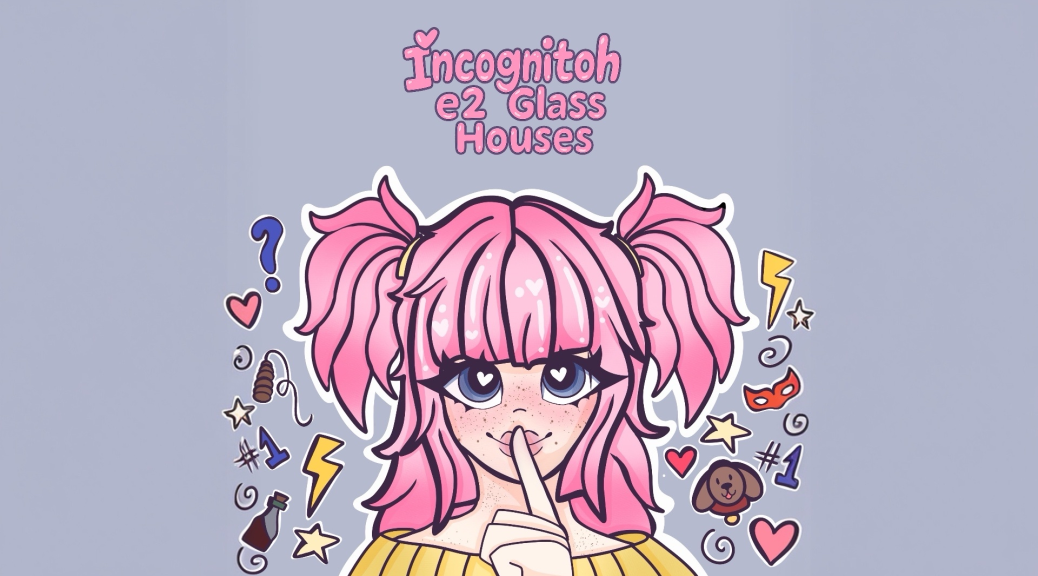
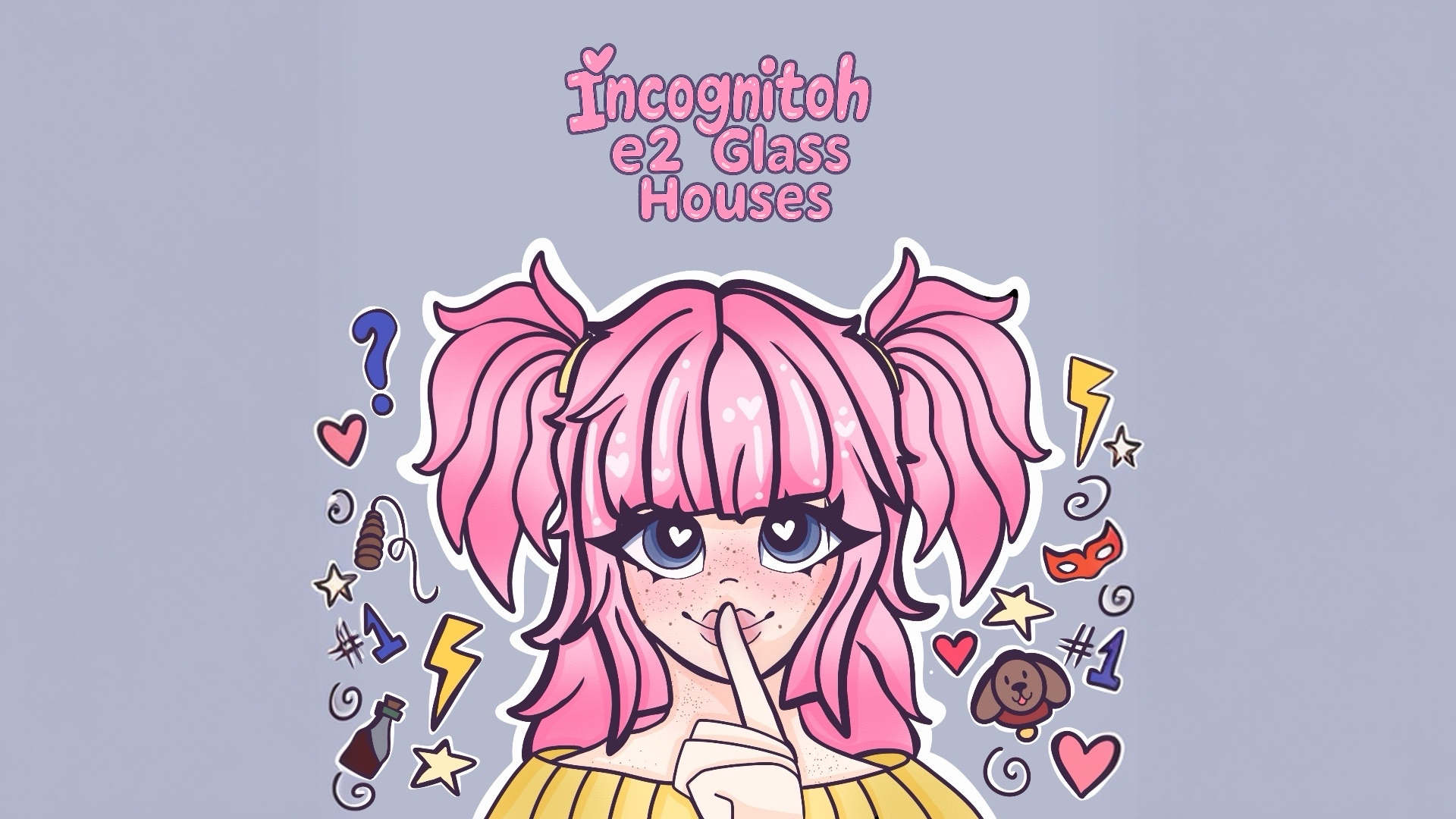
Incognitoh Episode 2 cover art featuring a hand-drawn anime-style girl with pink pigtails and heart-shaped pupils holding a finger to her lips, surrounded by floating icons including a question mark, lightning bolt, mask, puppy, bottle, whip, and stars against a lavender background
Incognitoh, Episode 2 Glass Houses. She knows something. She just doesn’t know what yet. Hand-drawn art by Echo Doll.